What an AI agent can do in video production for a small business
An AI agent for video takes over the repetitive part of production: it writes the scripts, generates voiceover, adds subtitles, cuts short clips from long footage and prepares the formats for each platform. The actual filming and the moments when a real person appears on screen remain a person’s job.
Where the time in video actually goes
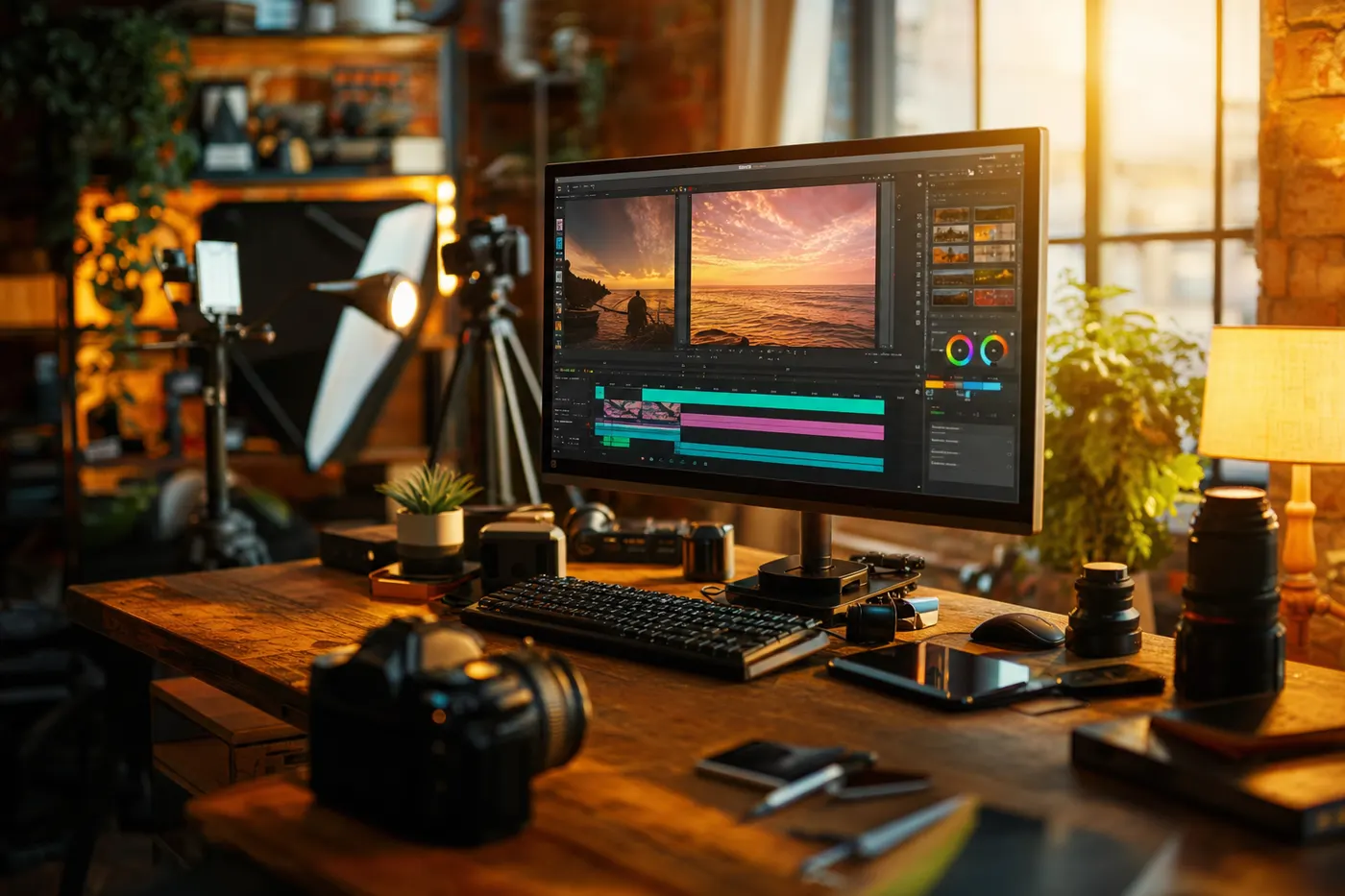
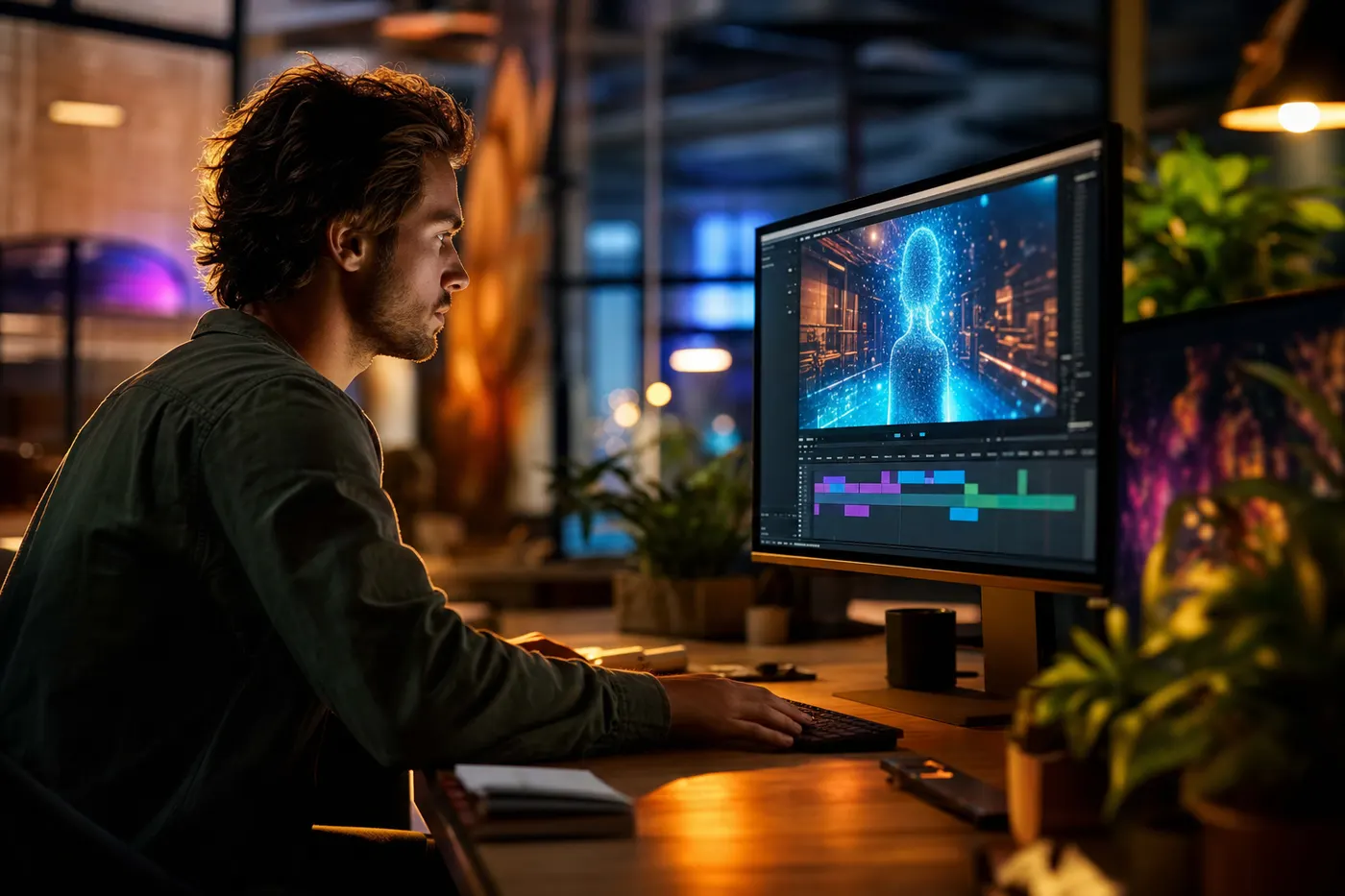
Not into filming. Filming takes an hour. What takes time is the script you keep rewriting, the editing, the subtitles, then redoing the same material in three different formats for three platforms. That is the part that makes one video a month feel like a lot.
Tell us what slows you down. We talk, then decide together whether and how we work.
What it actually does

Writes the script, in several versions and lengths, starting from the topic you give it
Generates voiceover, if you don’t want to or can’t record it yourself
Adds automatic subtitles, including translated ones, if you need them
Cuts short clips from long footage, choosing the moments that stand on their own
Adapts the format for each platform, without you resizing anything by hand
Writes the descriptions, titles and copy that go with the video
What you give it to work with
What comes out depends directly on what goes in. You don’t need studio equipment, but a few things have to be there from the start.
The raw footage, complete, without you trimming it first. The good moments are easier to pick from everything than from what you kept in a hurry.
The topic and audience of each video: who you are talking to and what you want the viewer to do after watching.
Your brand elements: logo, colors, fonts and an intro, if you already use one.
The list of things that must not appear: clients who haven’t given consent, old prices, screens showing internal data.
What a working week looks like
You drop the footage into a shared folder at the start of the week. The agent transcribes it, marks the moments that have a clear beginning and end, and sends you a list of proposed clips, each with its title and the reason it was picked. You tick the ones that stay. A few days later you receive the edited clips, subtitled, in the formats you need. You ask for corrections where needed, and the approved ones go into the publishing calendar.
In weeks when you haven’t filmed anything, it works through the archive or prepares the scripts for the next shoot, so you don’t lose time in front of the camera.
The case that pays off most clearly

You have a long recording: a webinar, a conversation, a one-hour presentation. You can get ten or twenty short clips out of it, each with a clear point, each good to post on its own. By hand, that is a day of work. With an agent, it is a morning in which you only choose what stays and what doesn’t.
That is why we recommend the video agent above all to companies that already produce long-form material and never get around to making use of it.
What we connect
Voice generation tools, if needed
Automated editing and rendering tools
The place where you keep your footage, so it can work on it
Your accounts on the platforms where you publish
Your footage stays where you already keep it, for example in a Google Drive folder, and the finished clips land in the same place, organized by shoot. If a new tool is needed, for generated voiceover for instance, we tell you the cost before we add it.
Which format for which platform

The same footage behaves completely differently depending on where it ends up, and manual adaptation is exactly the part that puts everyone off.
Vertical, under a minute, with large subtitles, for the short formats on TikTok, Reels and Shorts
Horizontal, longer, for YouTube and for the about page of your website
Square or vertical, with the first three seconds built to stop the scroll, for ads
Silent, with text on screen, for feeds where most people watch with their phone on mute
The last point is the one most often ignored. A large share of people watch without sound, so a video that depends on the voice to be understood loses a good part of its audience before it starts.
How much time it actually saves

So that nobody is sold an illusion, it is worth breaking down. Filming stays just as long, because nobody can shorten an hour of filming. The script, which normally takes a few hours of writing and rewriting, comes down to a ten-minute conversation in which you choose between versions.
Basic editing, subtitles and format adaptation are where the difference is biggest, because it is mechanical, repetitive work. A long recording you used to get two clips out of, because that was all the patience you had, becomes ten or fifteen.
The practical rule: the agent doesn’t give you more shoots, it gives you more out of each shoot. If you already produce material and never get around to using it, this is where it pays off most clearly.
What it doesn’t do

It doesn’t film. The camera and the people in front of it stay yours.
It doesn’t replace an editor’s signature cut, when the material really calls for one.
It doesn’t clone anyone’s voice or face without that person’s explicit consent.
It doesn’t make viral content on demand.
How to get started

If you already have filmed material sitting unused, start there. It is the fastest way to see the difference, because you are getting value from something you have already paid for once.
A few decisions stay with you from start to finish: who appears on camera, which topics are worth filming, how often you publish and whether you use a generated voice. The agent brings proposals, but it doesn’t make those calls.
Video pays off most when it is tied to the rest of your marketing. Short clips feed the social media calendar. A good article can become a script, and a long recording can become an article. The ad versions come from the same footage, with the first seconds reworked.
Where a person steps in
You approve the script before production. You see the final edit before publication. Both are moments that catch the things that sound good on paper and bad in reality.
There is also a separate conversation, about voice and face. If you use a generated voice or a generated presenter, we recommend saying so openly. Not because there is anything wrong with it, but because being found out later costs more than saying it up front would have.
Review doesn’t just mean checking whether it looks good. The person approving goes through the same points every time.
The subtitles, word by word. Proper names, product names and technical terms are where automatic transcription slips most often.
The cut. A short clip must not change the meaning of what was said in the full recording.
What is visible in the frame: faces, license plates, screens, documents left on a desk.
Added music and images, which need clear usage rights.
The claims in the script: prices, deadlines, promises. They have to be the ones valid today.
When something is unclear, the agent doesn’t guess. If it can’t tell whether the person in the frame gave consent or whether the offer in the footage still stands, it holds that clip and asks. The rest of the batch moves on.
To what we sell
The most important link on the page. From here you go up to the agent we sell.
Related links
Sideways, on the same level, so you can move easily between pages.
Questions about this topic
Can I use my own voice instead of a generated one?+
Yes, and often that is better. The agent then handles everything around the recording: script, editing, subtitles, formats.
How long does a short clip take?+
From existing footage, minutes. From scratch, it depends on how much has to be filmed, and no agent can shorten that.
Is it legal to use a generated voice in ads?+
Yes, as long as it doesn’t imitate a real person without their consent. Some platforms require you to label generated content, and we take their rules into account at setup.
Is video handled separately from the rest of marketing?+
No, it is part of the same marketing agent. That helps, because the script starts from the same messages as the ads and articles, so your communication stays consistent.
Do I need professional equipment?+
No. A recent phone, natural light and a simple microphone are enough for most short formats. Sound matters more than picture: a modest frame is forgiven, a voice nobody can make out is not. The agent can cut and subtitle the footage, but it can’t rescue a recording where you can’t be heard.
What happens to my raw footage?+
It stays yours and it stays in your own storage. The agent works on it with the access you grant, which you can revoke at any time. The finished clips land in the same place, organized by shoot, so you can still find them a year from now. We don’t reuse your material for another client.
Tell us what slows you down. We talk, then decide together whether and how we work.