AI marketing agent for medical clinics that brings in local patients
An AI marketing agent for a medical clinic takes over the repetitive part of attracting and keeping patients. It answers appointment requests that come in from the website or social media, sends SMS and WhatsApp reminders to cut no-shows, asks for reviews after consultations and keeps the Google profile up to date. It connects to the clinic’s CRM and calendar, so the data lives in one place, not in three apps. Below you can see exactly what it takes over, which tools it connects to and where the decision stays with you.

One department, one industry. Below are the pages for each technical side and everything we connect to the agent.
- 1Marketingthis very page
fixed
- 2Medical Clinicsthis very page
fixed
- 3tool / API / model / integration
see the pages below
Marketing capabilities in Medical Clinics
Each part of the marketing work, on its own page, shaped for medical clinics.
What a marketing agent takes over in a clinic

Marketing work in a clinic usually gets done between patients, by the front desk or the manager, in the evening, after hours. That is where lost appointments and unanswered reviews come from. An AI agent takes over precisely this part, repetitive and time-consuming, and keeps it moving without breaks.
Picks up appointment requests from the website, form or messages and enters them automatically in the clinic’s calendar, with confirmation by SMS and email.
Sends reminders before the consultation and win-back messages to patients who haven’t been in for a long time, to cut no-shows.
Asks for Google reviews after the visit, by SMS or a card with a QR code, and flags new reviews waiting for a reply.
Prepares posts for the Google profile and social media, plus draft answers to patients’ frequently asked questions.
It does not replace the doctor or the relationship with the patient. It handles the messages, forms and updates that would otherwise sit on the to-do list.
Tell us what slows you down. We talk, then decide together whether and how we work.
Appointments and a CRM that no longer rest on the front desk’s shoulders
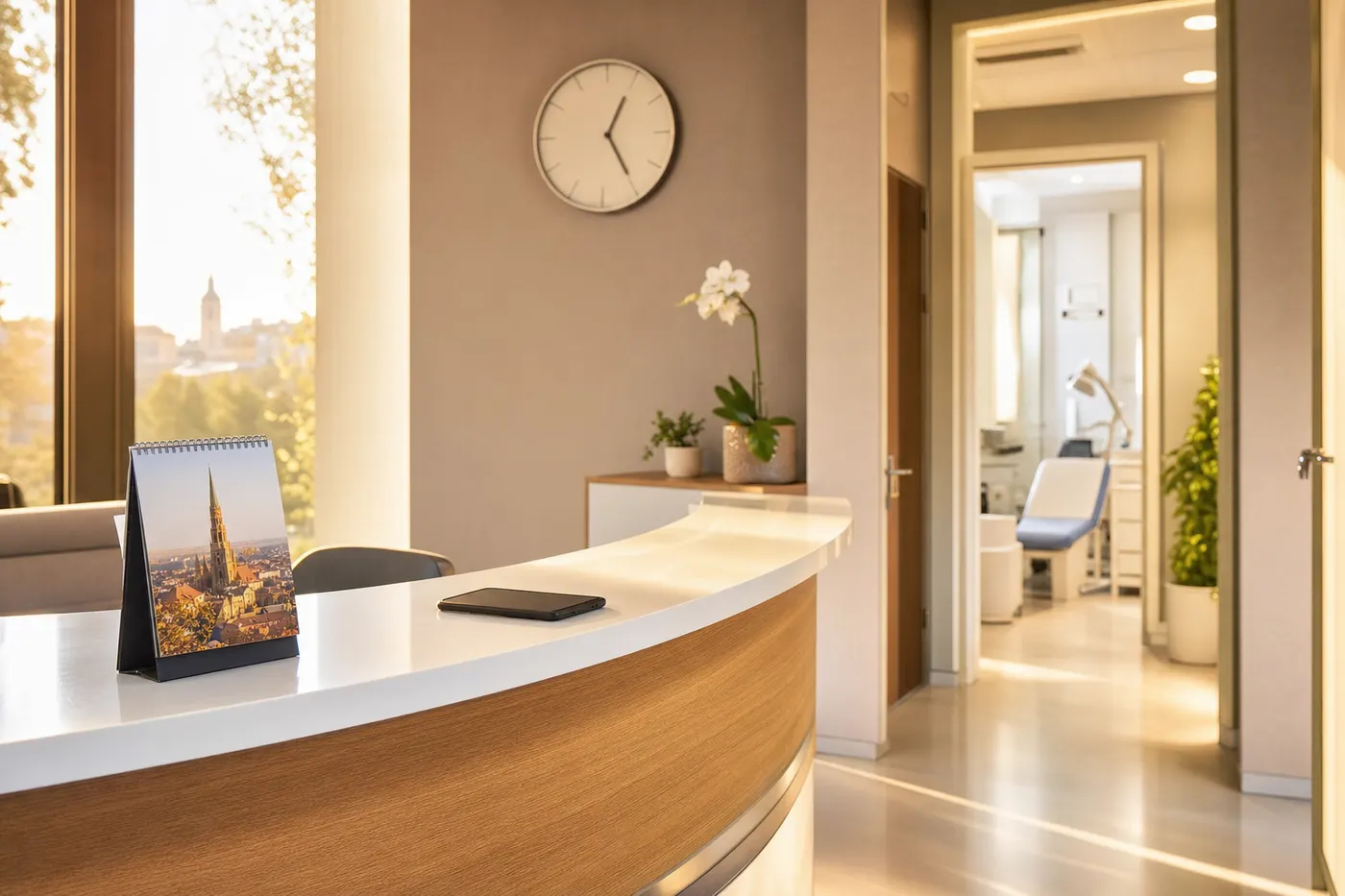
Most clinics in Romania already work with a medical CRM, whether GrowClinic, EasyWeek or Zarina CRM. The agent sits on top of what you already have. When a patient requests an appointment from the website or social media, the agent checks the doctor’s availability, proposes a time slot and enters the appointment in the CRM, then sends the confirmation by SMS and email.
No-shows are one of the biggest losses in a clinic. The agent sends a reminder the day before and asks the patient whether they are coming, and if the slot opens up, it offers it to another patient on the waiting list. On WhatsApp, where patients reply more often, the conversation flows naturally, without anyone from the front desk having to call.
Bringing back old patients belongs here too. The agent sees in the CRM who hasn’t come in for six months or a year and sends a check-up recall message, tailored to the type of service. The front desk keeps its time for the patients in front of it, not for lists and phone calls.
For clinics with several doctors or several locations, the agent keeps track of each schedule separately and sends each patient to the right place, with the doctor and at the location they asked for. Nothing gets lost between front desks.
The Google profile and the reviews that bring in local patients

For a clinic, the Google Business profile is the fastest source of nearby patients. When someone searches for a dentist or cardiologist close by, the clinics with a complete profile and recent reviews show up first. The agent keeps the profile alive, with updated opening hours, listed services and weekly posts, so it never looks abandoned.
Reviews weigh more than any ad. Many patients check a clinic’s rating before choosing. The agent asks for reviews after every consultation, by SMS or through a QR code card left at the front desk, and tracks which satisfied patients haven’t gotten around to writing yet.
Good reviews don’t come by themselves, not even from satisfied patients. Most of them forget to write, and the agent gives them a reason and a good moment, shortly after the visit, while the experience is fresh. That is how the number of reviews grows steadily, without feeling forced.
When a new review appears, the agent prepares a draft reply, a thank-you for the good ones and a calm answer to criticism. Here it does not hit publish on its own, especially when the complaint relates to a medical act.
Ads and content that reach the right patient

On top of appointments and reviews, the agent handles content and campaigns. It prepares Facebook and Instagram posts about the clinic’s services, about the doctors and about the questions patients ask most often, in clear language, without promises the law does not allow.
For ads, the agent prepares the structure of geo-targeted Google Ads campaigns, aimed at patients in the city and the neighborhoods around the clinic. It picks the terms people actually search for, proposes the budget and the copy, then tracks what brings in appointments and what only burns money.
The agent also reuses what worked before. If a campaign about a lab test package brought in appointments, it suggests repeating it at the right time of year, instead of starting from scratch every time. Seasonality, from fall check-ups to summer packages, goes into the plan.
All of this ties together. A patient who sees a post, opens the Google profile, reads the reviews and requests an appointment moves along a single thread, and the agent knows where each one stands.
Reports and compliance without evening work

At the end of the week or month, the agent pulls together a short report of what happened: how many appointments came from each source, how many no-shows there were, how many new reviews and how the ads performed. You see at a glance what brings in patients and where money is being lost, without collecting the numbers from four places yourself.
On the compliance side, the agent keeps communication within the limits of what a clinic is allowed to say about its services, with no guaranteed results and no patient data exposed where it shouldn’t be. Sensitive copy stays flagged for human review, as both common sense and the law require.
If something breaks the pattern, a sudden drop in appointments or a run of poor reviews in one week, the agent flags it, so you can look at the cause while it can still be fixed.
All these numbers stay with you, in a format you can read in a few minutes, not in a dashboard nobody opens.
Where a person steps in
Medical marketing touches sensitive areas, so not everything the agent does goes out automatically. The reply to a negative review about a treatment, messages about a diagnosis or any communication that could be read as medical advice goes past a person before it goes out.
The agent prepares, proposes and waits. The manager or the doctor approves delicate copy, ad budgets above a certain threshold and campaigns on sensitive topics. The rules of healthcare communication, including what can and cannot be promised, stay in the hands of the people in the clinic.
In practice, the agent makes no medical decisions and does not speak on the doctor’s behalf. It stays on the side of messages, appointments and visibility, and anything that touches a patient’s health stops with a person who knows the case.
That way the repetitive work is taken off your plate and the important decisions stay with you. The agent carries the volume, you keep the tone and the responsibility.
To what we sell
The most important link on the page. From here you go up to the agent we sell.
Related links
Sideways, on the same level, so you can move easily between pages.
Questions about the marketing agent in Medical Clinics
What exactly does an AI marketing agent do for a medical clinic?+
It takes over online bookings, reminders, review requests, posts on Google and social media and the structure of ad campaigns. It connects to the clinic’s CRM and calendar, and sensitive decisions stay with a person.
Does it connect to the software we already use?+
Yes. The agent sits on top of tools used in Romania such as GrowClinic, EasyWeek or Zarina CRM and on top of the Google Business profile, without you changing the system you work with.
How does it help with no-shows?+
It sends SMS and WhatsApp reminders before the consultation, confirms attendance and offers freed-up slots to patients on the waiting list, so the schedule stays full.
Who replies to negative reviews?+
The agent prepares a calm draft reply, but publishing a response to criticism about a medical act is approved by a person in the clinic. Sensitive communication always goes through you.
Tell us what slows you down. We talk, then decide together whether and how we work.