AI operations agent for a beauty salon in Romania
An AI operations agent takes over the repetitive admin work in a beauty salon, meaning bookings, confirmations, stock and invoicing, and connects to the tools the salon already uses, from MERO and Programo to SmartBill. It syncs the calendar, sends WhatsApp reminders to bring no-shows down, keeps track of hair color and retail products and prepares the e-Factura for SPV. The decisions that involve the client and the money stay with people. Below you’ll see exactly what it takes over, how it connects to each tool and where a person steps in.

One department, one industry. Below are the pages for each technical side and everything we connect to the agent.
- 1Operationsthis very page
fixed
- 2Beautythis very page
fixed
- 3tool / API / model / integration
see the pages below
What the operations agent connects to in Beauty
We connect them to the agent one at a time, across tools, APIs, models and integrations. The first ones are below, the rest are behind the button.
Instagram Direct
Fresha
Booksy
EasyWeek
Google Drive
Google Sheets
What an operations agent takes over in a beauty salon
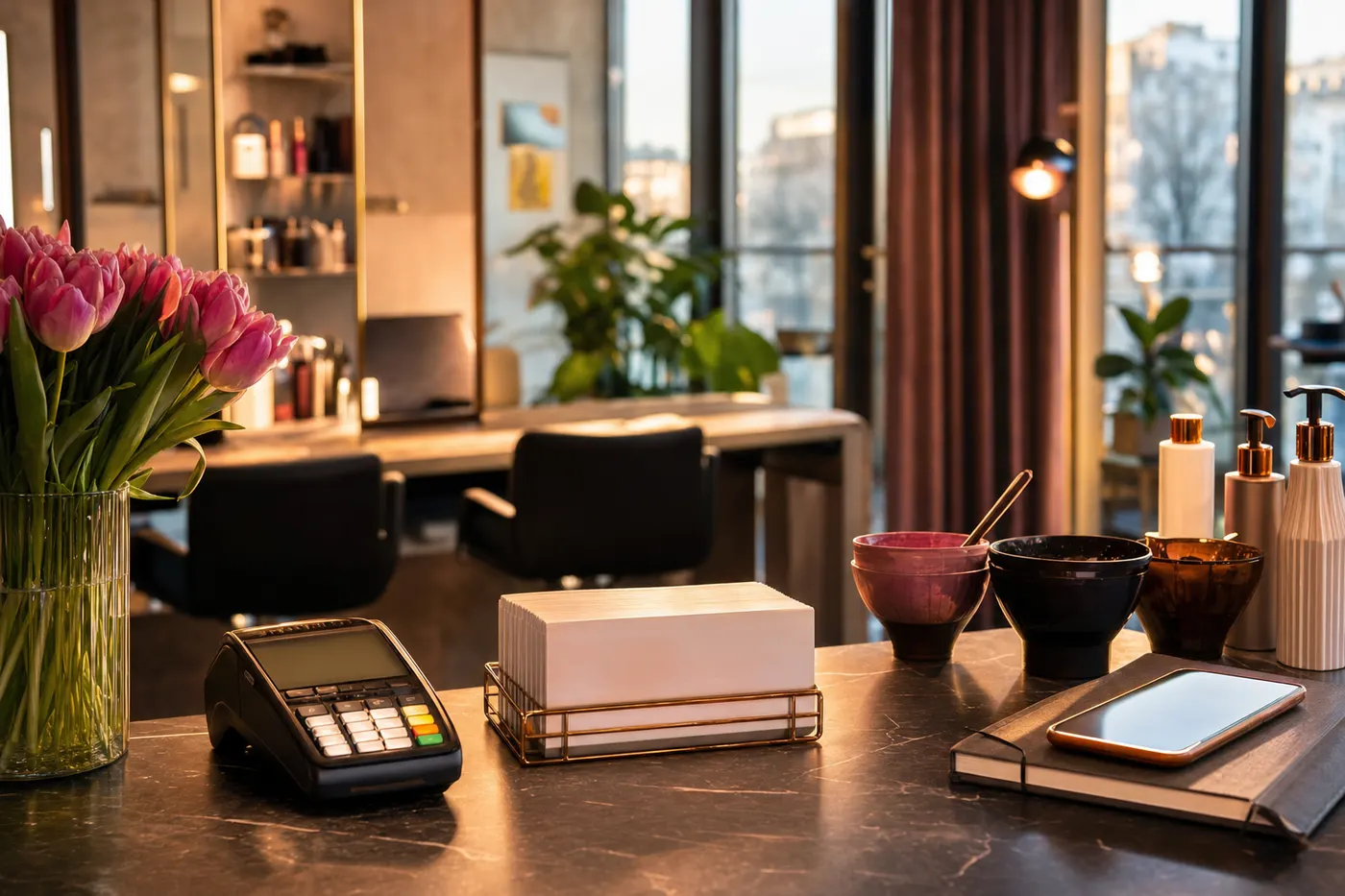
A small or mid-sized salon in Romania loses a good few hours a day to moved appointments, confirmations sent by hand on WhatsApp, hair color and product stock checked by eye and invoices drawn up in the evening, after the last client has left. The AI operations agent takes over exactly this repetitive work, connects to the tools the salon already uses and lets the front desk and the manager deal with people, not the keyboard.
In practice, the agent handles the admin side that repeats day after day and that needs consistency, not human intuition.
Manages the booking calendar in MERO, Programo or Stilio, moves reservations when a client cancels and offers the free slot to the next person on the list.
Sends confirmations and reminders by WhatsApp and SMS before the appointment, to cut the no-shows that leave the chair empty.
Keeps track of the stock of consumables, hair color and retail products and flags when a shade or a brand is close to zero.
Prepares invoices in SmartBill or Facturis and sends the e-Factura to SPV for the services and products sold.
Tell us what slows you down. We talk, then decide together whether and how we work.
How it connects to the calendar and online bookings

The heart of a salon is the calendar. In Romania, most salons work with MERO for visibility and bookings from new clients, and alongside it they use a management system such as Programo, Stilio or EasyWeek for each stylist’s internal calendar. The problem appears when these flows don’t talk to each other and the front desk rewrites the same appointments by hand in two places.
The agent sits in the middle and keeps them in sync. When a booking comes in from MERO or from Fresha, it moves it into the internal calendar, checks that the requested stylist is free and that the length of the service fits the time left before the next client. If there is an overlap, it doesn’t quietly resolve it alone. It proposes two rescheduling options and sends them to the front desk to choose from.
The waiting list belongs here too. When someone cancels at the last minute, the agent looks at who asked for a nearby time, sends a WhatsApp message with the freed slot and confirms the first person who replies. The chair stays occupied, and the client who has long wanted a hard-to-get appointment gets a real chance.
Confirmations, reminders and clients who don’t show up

No-shows are the money pit of any salon. A three-hour balayage appointment that isn’t honored means a chair blocked for nothing and a stylist paid with no revenue coming in. The agent works on the communication flow to reduce this risk, using the channels clients actually read, meaning WhatsApp and SMS, not email.
A day before, it sends the reminder with the time, the service and the stylist, and a few hours before, it asks for a short confirmation. If a client replies that she can’t make it, the agent frees the slot immediately and starts the waiting list flow described above. If she doesn’t reply at all, it marks the appointment as uncertain and alerts the front desk, so a person can decide whether to call once more.
For loyal clients, the agent can also send a return message at the interval that suits each service, for example every four or six weeks for a cut and root touch-up. The wording stays as set by the salon. The agent only picks the right moment and the right person, without turning communication into a wave of messages that irritates.
Stock of products, consumables and retail

A salon doesn’t sell only services. It also sells retail products and uses up hair color, developers, foils, masks and single-use items every day. When stock isn’t kept up to date, you either run out of the requested shade in the middle of a service or have money tied up in products that sit on the shelf for months. The agent keeps these records linked to the inventory system, whether that is SmartBill, Facturis or eGestiune.
With every service that uses product and every retail sale, the agent deducts the quantity from stock and watches the thresholds set by the manager. When a frequently used color drops below the set minimum, it prepares a proposed order for the supplier and puts it in front of the manager. It doesn’t send the order on its own, because the purchasing decision depends on the budget and on the relationship with the distributor.
Over time, these records also become a source of useful answers. The agent can show which retail products sell well, which shades are requested most often and what has sat untouched for a long time, so the salon stops ordering blind and stops tying up capital in dead shelves.
Invoicing, payments and reporting in SPV

The tax side is exactly the kind of work where mistakes cost money and repetition wears people down. After every service or sale, the correct invoice has to be issued, with the right product or service, and since e-Factura became mandatory the documents go to SPV. The agent takes over drafting in SmartBill or Facturis, where the client and service details already come from the calendar, and prepares the e-Factura for submission.
The flow stays verifiable. The agent fills in the invoice, matches it with the appointment and with the products used or sold, then leaves it ready to validate. The salon can choose for invoices under a certain value to go out automatically, and for large ones or those with special situations, for example vouchers or subscriptions, to pass by a person first.
At the end of the day and of the month, the agent can put together a simple picture of revenue by stylist, by type of service and by retail, using the same inventory data. It doesn’t replace the accountant. It gives them a clean statement that is easy to hand over, instead of a stack of receipts and notes.
Where the human stays in the loop
The agent takes over the volume and the repetition, but it doesn’t make the decisions that involve the client relationship and the salon’s money. Rescheduling a difficult client, a welcome discount, a complaint after a service that went wrong or a conversation about a color that didn’t turn out as expected stay with the front desk and the manager. That is where tact and context are needed, not an automated message.
In the same way, supplier orders, approval of large invoices and any message with a delicate tone go through a person before they leave. The agent proposes, shows the prepared version and waits for a sign from the salon. Its role is to carry the work up to the last step and leave the final decision where it matters, with the people who know the clients and answer for the business.
This way, the salon team wins back the time lost on admin and returns it to the client in the chair, while the repetitive part runs on its own, but under a person’s eye.
To what we sell
The most important link on the page. From here you go up to the agent we sell.
Related links
Sideways, on the same level, so you can move easily between pages.
Questions about the operations agent in Beauty
Which tools does an AI operations agent for salons in Romania connect to?+
It links to the platforms already used in the salon, from calendars and booking tools such as MERO, Programo, Stilio, EasyWeek or Fresha, to inventory and invoicing systems like SmartBill, Facturis or eGestiune, plus the WhatsApp and SMS communication channels. It doesn’t ask you to change tools. It works on top of them.
Does the agent reduce appointment no-shows?+
Yes, through confirmations and reminders sent by WhatsApp and SMS before the appointment, channels that clients actually read. When someone cancels, the agent frees the slot and offers it right away to the people on the waiting list, so the chair doesn’t stay empty.
Does the agent issue invoices and the e-Factura on its own?+
It prepares the invoice in SmartBill or Facturis, matches it with the appointment and the products sold and leaves it ready for SPV. The salon can choose for small invoices to go out automatically, and for large ones or those with vouchers and subscriptions to be validated by a person first.
Which decisions stay with the people in the salon?+
The relationship with difficult clients, complaints, discounts, supplier orders and approval of large invoices stay with the front desk and the manager. The agent proposes and prepares everything, but the final decision and the sensitive messages go through a person.
Tell us what slows you down. We talk, then decide together whether and how we work.