AI operations agent for medical clinics, from appointments to CAS reporting
An AI operations agent for a medical clinic takes over the repetitive work at the front desk and behind it: appointments from the phone, web form and WhatsApp, confirmations, reminders and the admin work tied to the insurance house. It works directly in the clinic’s software, from the schedule in Charisma or MedSoft to the invoicing system, and keeps the schedule full through the waiting list. It prepares the reports for CAS and SIUI and collects patient feedback, without touching the medical decision. Below you can see exactly what it takes over, which tools it connects to and where a person stays in command.
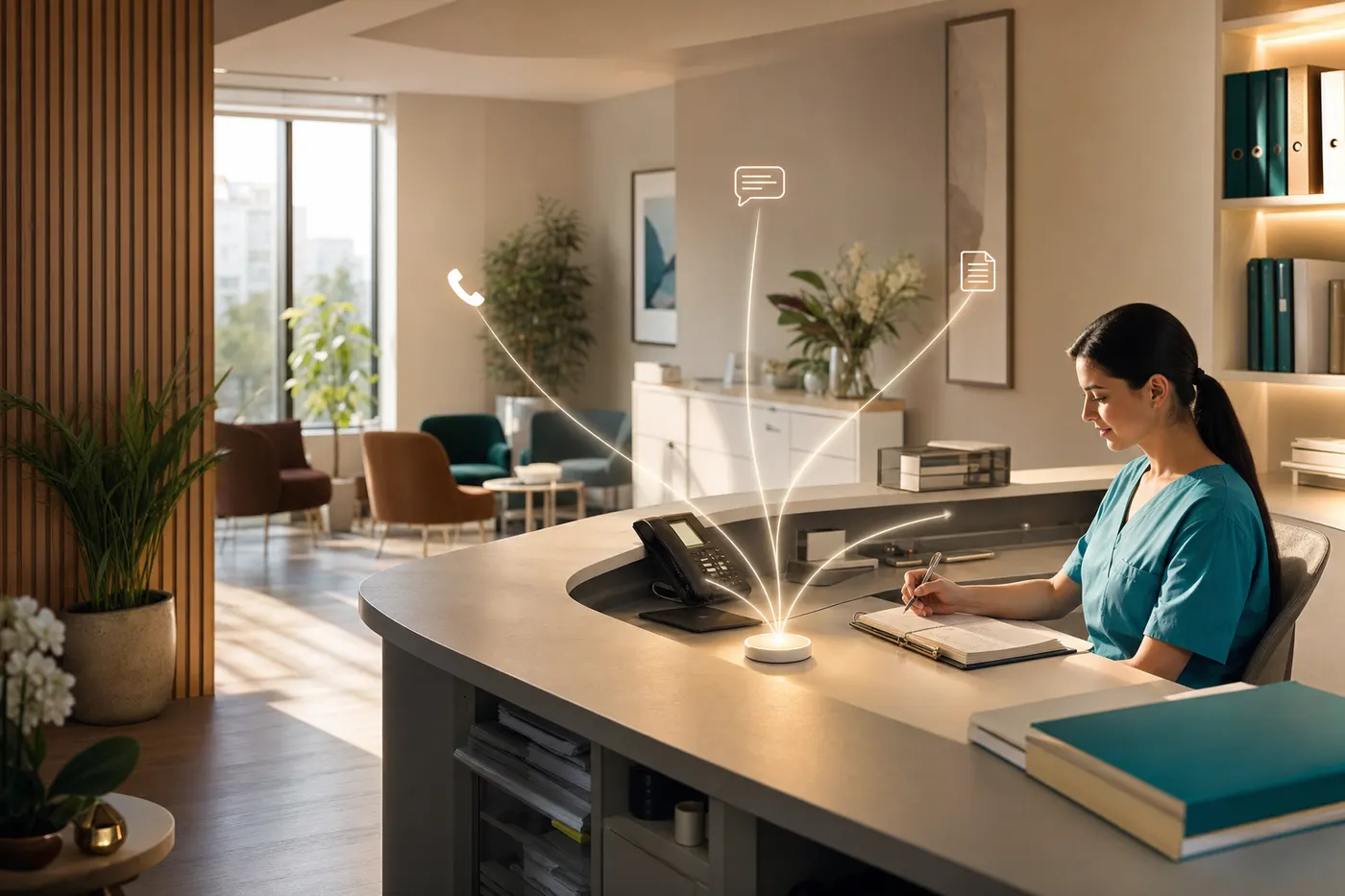
One department, one industry. Below are the pages for each technical side and everything we connect to the agent.
- 1Operationsthis very page
fixed
- 2Medical Clinicsthis very page
fixed
- 3tool / API / model / integration
see the pages below
What the operations agent connects to in Medical Clinics
We connect them to the agent one at a time, across tools, APIs, models and integrations. The first ones are below, the rest are behind the button.
Clinic systems
Charisma Medical
Google Drive
Google Sheets
Airtable
Notion
What an operations agent takes over in a medical clinic

In a medical clinic, the front desk and operational coordination swallow hours every day. Phones ringing while patients wait at the counter, moved appointments, confirmations, waiting lists, reports to the insurance house. An AI operations agent takes over the repetitive, predictable part of this volume, works directly in the clinic’s software and lets the medical team look after patients, not coordination.
Picks up appointments that come in by phone, web form and WhatsApp and enters them in the schedule in Charisma, MedSoft or SanoPro, checking the doctor, the room and the length of the consultation.
Sends confirmations and reminders by SMS and WhatsApp before the consultation and automatically refills freed-up slots from the waiting list.
Prepares the recurring reports for CAS and structures the data for SIUI, flagging validation errors before they are submitted.
Collects patient feedback after the consultation, tracks Google reviews and centralizes complaints for the management team.
Tell us what slows you down. We talk, then decide together whether and how we work.
Appointments, the schedule and the channels patients call on

The busiest channel in a clinic is still the phone. The call center jams at peak hours, and patients who can’t get through call a competing clinic. The agent takes the repetitive calls and messages, the ones where the patient wants an appointment with a certain doctor, a reschedule or information about preparing for a test, and resolves them directly in the schedule of the medical software.
The connection to the clinic’s software is the important part. Whether you use Charisma Medical Software, MedSoft, SanoPro or Evolvo, the agent reads real availability by doctor and room, proposes slots and writes the appointment where the front desk sees it too. When a patient cancels, the freed-up slot does not stay empty. The agent contacts the next person on the waiting list and fills it.
Reminders reduce no-shows, which are a direct loss for a private clinic. The agent sends the confirmation by SMS and WhatsApp, asks whether the patient is still coming and, if the answer is no, opens the slot for someone else. All these messages go out in a tone agreed in advance with the clinic, in the agreed language and format.
Reporting to CAS, SIUI and the national health card

The admin work tied to insurance is among the most time-consuming and the most error-prone. Medical service providers report to the Health Insurance House through SIUI, and validating the national health card and keeping records of reimbursed services demand attention at every step.
The agent does not replace the person who signs the report. It prepares the ground. It structures the consultation data, checks whether the services are coded correctly according to the CNAS nomenclatures, flags the lines that would fail SIUI validation and gathers the missing documents before the deadline. When reporting day comes, the person in charge has a clean file instead of a whole day of data cleanup.
Invoicing works the same way. The agent prepares the invoices for patients who pay directly and for subscribers on a subscription rate, matches them to the services provided and runs them through the clinic’s invoicing system, including the e-Factura flow where it applies.
Reviews, feedback and the clinic’s reputation

Online reputation often decides whether a new patient chooses your clinic or the one across the street. Reviews on the Google profile, feedback from post-consultation forms and comments in the clinic’s own app say something important, but they are rarely read systematically.
The agent automatically sends the feedback request after the consultation, at a moment when the experience is fresh, and centralizes the answers. A tool like Zarina CRM already collects reviews after the consultation, and the agent works in the same spirit: it groups the recurring themes, such as waiting time, communication and cleanliness, and puts them in front of management as patterns, not scattered messages.
When a negative review or a complaint appears, the agent flags it and prepares a draft reply in the clinic’s tone. It does not publish it on its own. It sends it for approval, because a public reply to a medical complaint is exactly the kind of decision that stays with a person.
How the agent connects to the software you already use

The agent does not ask you to change the medical software you are used to. It connects to what you already have: the schedule in Charisma or MedSoft, the clinic’s WhatsApp and SMS channel, the location’s Google profile and the invoicing system. The framework behind it does not matter to the clinic. What matters is that the data gets where it needs to go.
The rollout starts with one flow, not everything at once. It usually begins with appointments and reminders, where the effect shows quickly in fewer no-shows and a call center that jams less often. As the clinic gains confidence, reporting, feedback and invoicing are added.
The practical result is a front desk that no longer misses calls, a schedule that fills itself from the waiting list and a management team that sees in time what patients are saying and what the insurance house requires. Repetitive work goes to the agent, decisions stay with people.
Where a person stays in the loop
An operations agent is good at volume and repetition, not at clinical judgment or sensitive situations. That is why the boundary is clear. Anything related to the patient’s medical condition, triage, an emergency or a treatment recommendation is not the agent’s job and is handed to a person immediately.
Likewise, high-stakes decisions stay with the team. Approving a CAS report before it is submitted, publishing a reply to a review, handling a serious complaint, a pricing or scheduling exception for a special case, all of these go past a person. The agent prepares, proposes and explains, but a person confirms.
This split is not a limitation. It is the right way to work in a clinic. The patient gets a quick answer on simple things, and the staff keep their time and attention for what requires medical training and for the direct relationship with the patient.
To what we sell
The most important link on the page. From here you go up to the agent we sell.
Related links
Sideways, on the same level, so you can move easily between pages.
Questions about the operations agent in Medical Clinics
What exactly does an AI operations agent do in a medical clinic?+
It picks up appointments from the phone, form and WhatsApp, writes them in the schedule of the clinic’s software, sends reminders, fills canceled slots from the waiting list and prepares the reports for CAS. Medical and sensitive decisions stay with the team.
Which medical software does it connect to?+
The programs already used in clinics in Romania, such as Charisma Medical Software, MedSoft, SanoPro or Evolvo, plus the SMS and WhatsApp channels, the clinic’s Google profile and the invoicing system. It does not require changing your existing software.
Can it handle SIUI and CAS reporting on its own?+
It prepares the data, checks the service coding against the CNAS nomenclatures and flags the errors that would fail validation, but the final report is confirmed and submitted by the person in charge. The agent cleans and structures, a person signs.
Does it replace the clinic’s front desk?+
No. It takes over the repetitive volume, calls, confirmations, reminders and feedback, so the front desk stops missing calls at peak hours. Triage, emergencies and the direct relationship with the patient stay with people.
Tell us what slows you down. We talk, then decide together whether and how we work.