AI operations agent that keeps an auto repair shop’s daily workflow on track
An AI operations agent for an auto repair shop takes over the administrative work that eats up the time of the front desk and the mechanics. It confirms and reschedules customers, turns requests from the phone and WhatsApp into work orders, prepares estimates and invoices from the data already entered and puts them on ANAF’s e-Factura route. It connects to the tools the shop already uses, from ServiceGuru or ServiceMonitoro to the booking calendar and SMS, while the technical decision and the pricing decision stay with a person. The sections below show exactly what it takes over, which tools it works on and where a person always steps in.

One department, one industry. Below are the pages for each technical side and everything we connect to the agent.
- 1Operationsthis very page
fixed
- 2Auto Repairthis very page
fixed
- 3tool / API / model / integration
see the pages below
What the operations agent connects to in Auto Repair
We connect them to the agent one at a time, across tools, APIs, models and integrations. The first ones are below, the rest are behind the button.
Auto repair shop software
ClientDesk
ServiceProX
SoftServ
Google Drive
Google Sheets
What an operations agent takes over in an auto repair shop
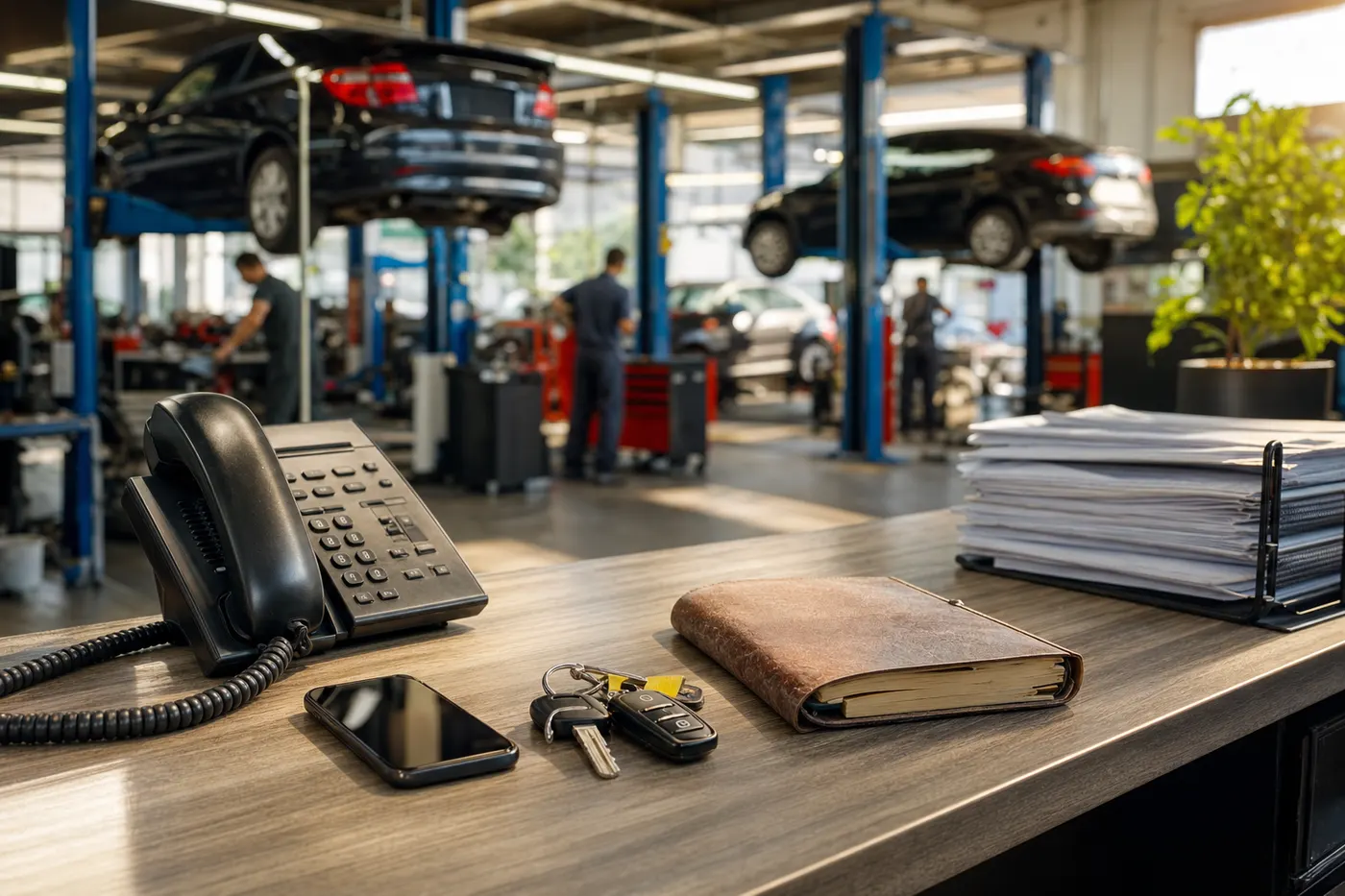
An auto repair shop loses the most time not in the repair bay but on the phone, on WhatsApp and in the booking notebook. An AI operations agent sits exactly on this administrative layer and runs the repetitive work by itself, so the data travels correctly from the customer’s first contact to the invoice sent.
Confirms and reschedules customers in the workshop calendar and sends the reminder one day before the booking, by SMS or WhatsApp.
Turns requests received by phone, on WhatsApp or through the online booking form into work orders with the car, the reported fault and the assigned mechanic.
Prepares the estimate and the invoice from the work order data, sends them for validation and puts them on the e-Factura route to ANAF’s SPV.
Tracks the due dates for ITP inspections, servicing and the return of ordered parts and notifies the customer or the front desk before they expire.
In practice, the agent does not stand in for the mechanic or for the service manager. What it does is keep the records, write the messages, fill in the fields and move information from one place to another, so the people in the workshop work on cars, not on paperwork.
Tell us what slows you down. We talk, then decide together whether and how we work.
How it keeps the workshop calendar full but not overloaded

Scheduling is where a working day is won or lost. Many repair shops in Romania already use platforms such as ServiceGuru, ServiceMonitoro or AgendaMea for their online booking calendar, and an AI agent sits on top of them and uses them as the single source of truth. When a customer calls or writes, the agent checks which slots are free, takes into account how many lifts and how many mechanics are available that day and proposes a realistic time, not one that crowds the front desk first thing in the morning.
Once the booking is in the calendar, the agent closes the loop without anyone having to remember. It sends the confirmation right away, then the reminder one day ahead, using SMS or WhatsApp Business, the channels Romanian customers open most often. When someone wants to postpone, the agent finds a new slot and frees up the one left open, so the lift does not stand empty for a whole morning.
Request triage belongs here too. A booking for an oil change does not take as long as a timing belt replacement, and the agent can estimate the duration based on the type of job and the history in the platform, so the calendar reflects real workshop time, not just some hours jotted down at random.
Estimates, parts and invoices that no longer get lost in drawers

Once the car is in the shop, the part where mistakes cost money begins. The agent takes the data from the work order and prepares the estimate in the software the company uses, whether Selectsoft, Soft Service Auto from Centrul de Soft or the modules from Expert Software. It fills in the labor, adds the parts identified and leaves a draft ready to be checked, instead of the front desk typing everything from scratch at the end of the day.
On the parts side, the agent can look up the codes in the catalogs the shop works with, from distributors such as Autonet, Elit or Augsburg, and can compare availability before anyone picks up the phone. It keeps track of the orders placed, marks what has come into stock and what is still missing and warns if an ordered part is late and is keeping a car on the lift longer than the customer was promised.
At the end, the invoice is no longer a separate step. From the approved estimate, the agent generates the invoice and prepares it for e-Factura, mandatory through ANAF’s SPV, so the document goes out correctly and on time. Accounting receives clean data, and the customer receives the invoice by email or WhatsApp without having to ask for it the next day.
The link with the customer and the history of every car

A repair shop customer comes back if they feel the shop keeps them informed. The agent keeps the thread of communication from the first message and announces the moments that matter: when the car has gone up on the lift, when an additional problem has come up during diagnosis and when the job is ready for pickup. Messages go out by SMS or WhatsApp and are written clearly, without technical jargon that scares someone who does not know cars.
Every job stays tied to the car in the platform history. When a customer returns half a year later, the agent has at hand what was replaced, what was recommended and what was left to do, so the front desk no longer rummages through old receipts. Based on this history, the agent can send a timely reminder for the next service or for the upcoming ITP inspection, exactly the kind of message that brings the car back to the shop.
The agent can also ask for feedback after the job and point satisfied customers to the shop’s Google profile, where reviews really do bring in new customers from the area. Review requests go only to those who had a good experience, and negative messages reach a person first, not the public directly.
What you see at the end of the day without digging through notebooks

A service manager wants to know in the evening how many cars came in, how many went out, what is still on the lift and where the flow got stuck. Platforms like Imperial Service from S2S or the reporting modules in management software already produce this data, and the agent gathers it into a clear summary, instead of leaving someone to count work orders at closing time.
Every day the agent can mark which jobs are ready to invoice, which parts still need to be ordered for the cars on hold and which bookings are confirmed for the next day. That way, the morning does not start with surprises but with a clear list of priorities, and the front desk knows from the outset which cars are coming and what each customer is waiting for.
The agent connects to the tools the shop already has and does not require changing the management software. It takes over the repetitive work around them, and the technical, commercial and sensitive decisions stay with the people in the workshop.
Where a person stays in the loop
An auto repair shop works with the safety of people on the road, so the agent does not make technical decisions. Diagnosis stays with the mechanic, and recommending an additional repair, choosing between an original part and an aftermarket one or assessing a brake fault is up to the person who has their hands on the car. The agent gathers the data and puts it in front of them, but the conclusion comes from the mechanic.
Likewise, every estimate goes to the customer only after a person confirms it. The agent prepares the figures, but approving the labor, the final price and any work beyond the budget initially discussed stays with the service manager. No amount reaches the customer without someone in the company having seen it and pressed the button.
Sensitive cases always go through a person. A warranty complaint, an unhappy customer, a dispute over a part or a situation where the car came out more expensive than the owner expected is not solved with an automated message. The agent flags them quickly and passes them to the right person, so that person can answer with context, not with a template.
To what we sell
The most important link on the page. From here you go up to the agent we sell.
Related links
Sideways, on the same level, so you can move easily between pages.
Questions about the operations agent in Auto Repair
Do I have to change my management software to use an AI operations agent?+
No. The agent sits on top of the existing tools, whether ServiceGuru, ServiceMonitoro, Selectsoft or Soft Service Auto, and takes over the administrative work around them. It does not ask you to migrate your data or learn a new program.
Who approves the estimate before it reaches the customer?+
Always a person in the shop. The agent prepares the labor and the parts in a draft, but the final price and any additional work go to the customer only after the service manager or the front desk confirms them.
How does the agent send reminders to customers?+
By SMS and WhatsApp, the channels Romanian customers open most often. It sends the confirmation at booking, the reminder one day ahead and announces the important moments, such as the car being ready for pickup or the ITP inspection coming up.
Does the agent handle invoicing and e-Factura?+
Yes, from the approved estimate it generates the invoice and prepares it for e-Factura through ANAF’s SPV, so the document goes out correctly and on time. Accounting receives clean data, with no work orders retyped at the end of the day.
Tell us what slows you down. We talk, then decide together whether and how we work.