AI marketing agent for dental practices
An AI marketing agent in a dental practice takes over the repetitive work that clogs up the front desk. It brings patients back for check-ups through software such as dROOT or DentManager, keeps the Google profile and reviews in order and prepares the social media posts. It connects to the tools the practice already uses, while decisions and sensitive materials stay with the dentist. Below you can see exactly what it takes over, which tools it works with and where a person stays in the loop.

One department, one industry. Below are the pages for each technical side and everything we connect to the agent.
- 1Marketingthis very page
fixed
- 2Dentistrythis very page
fixed
- 3tool / API / model / integration
see the pages below
Marketing capabilities in Dentistry
Each part of the marketing work, on its own page, shaped for dentistry.
What a marketing agent takes over in a dental practice

In a dental practice, marketing work splits in two. There is the repetitive part, which happens every day and eats up the front desk’s time, and there is the decision part, where a person’s judgment counts. The AI marketing agent takes over the first part, connects to the tools the practice already uses and lets the dentist and the front desk look after patients and whatever is sensitive.
Reactivates patients who have not come back for a check-up and sends the recall messages through the practice software, such as dROOT or DentManager.
Keeps the Google Business Profile up to date, asks for reviews after the visit and prepares replies to the ones received.
Prepares content for Instagram and Facebook, including before-and-after materials, with the patient’s consent.
Gathers into a single report where bookings come from, so you can see which channel really brings in new patients.
Tell us what slows you down. We talk, then decide together whether and how we work.
Recall and bookings tied directly to the practice software

Most of the money is lost not on new patients but on existing ones who stop coming back for check-ups. A patient who had a filling done a year ago and was never called back is missed marketing. Dental software in Romania, such as dROOT, DentManager, AtriumApp or Dentintel, already has recall and SMS reminder features, but often nobody has the time to use them consistently.
This is where the agent comes in. It connects to the records in the software, identifies the patients who have gone past their check-up interval and prepares the wave of recall messages, in clear groups, for example a professional cleaning at six months or a return visit after a treatment. The text is tailored, not one identical message sent to everyone, and the sending schedule takes into account the hours when people really do reply.
Reminders for appointments already booked work the same way, and they reduce no-shows. The practice keeps using the same channels, SMS or WhatsApp. The agent just handles preparing and ordering the messages, and the front desk confirms before they go out.
Google presence and the reviews that bring in patients from the area

When someone searches for a dentist in their city, the decision is made in a few seconds, based on what shows up on Google and on the map. A complete Google Business Profile, with correct opening hours, recent photos and fresh reviews, weighs more than any ad. Local searches bring the patients with the highest intent, meaning people ready to book now, not months from now.
The agent keeps this profile alive. It checks that the opening hours and contact details are correct, proposes photos and updates, and when a new review appears it prepares a reply, just as attentive to the good ones as to the critical ones. On the review collection side, it builds a flow through which the satisfied patient receives, after the visit, a clear invitation to leave an opinion, without being pestered.
On top of all this, the agent tracks which words people in the area search for, so the ads and the website copy speak the same language as the patient, whether the topic is an implant, veneers or a dental emergency. A practice’s promotion budget is usually cautious, and the agent helps make sure that money does not go to channels that bring nothing.
Instagram and Facebook content that does not depend on a moment of inspiration
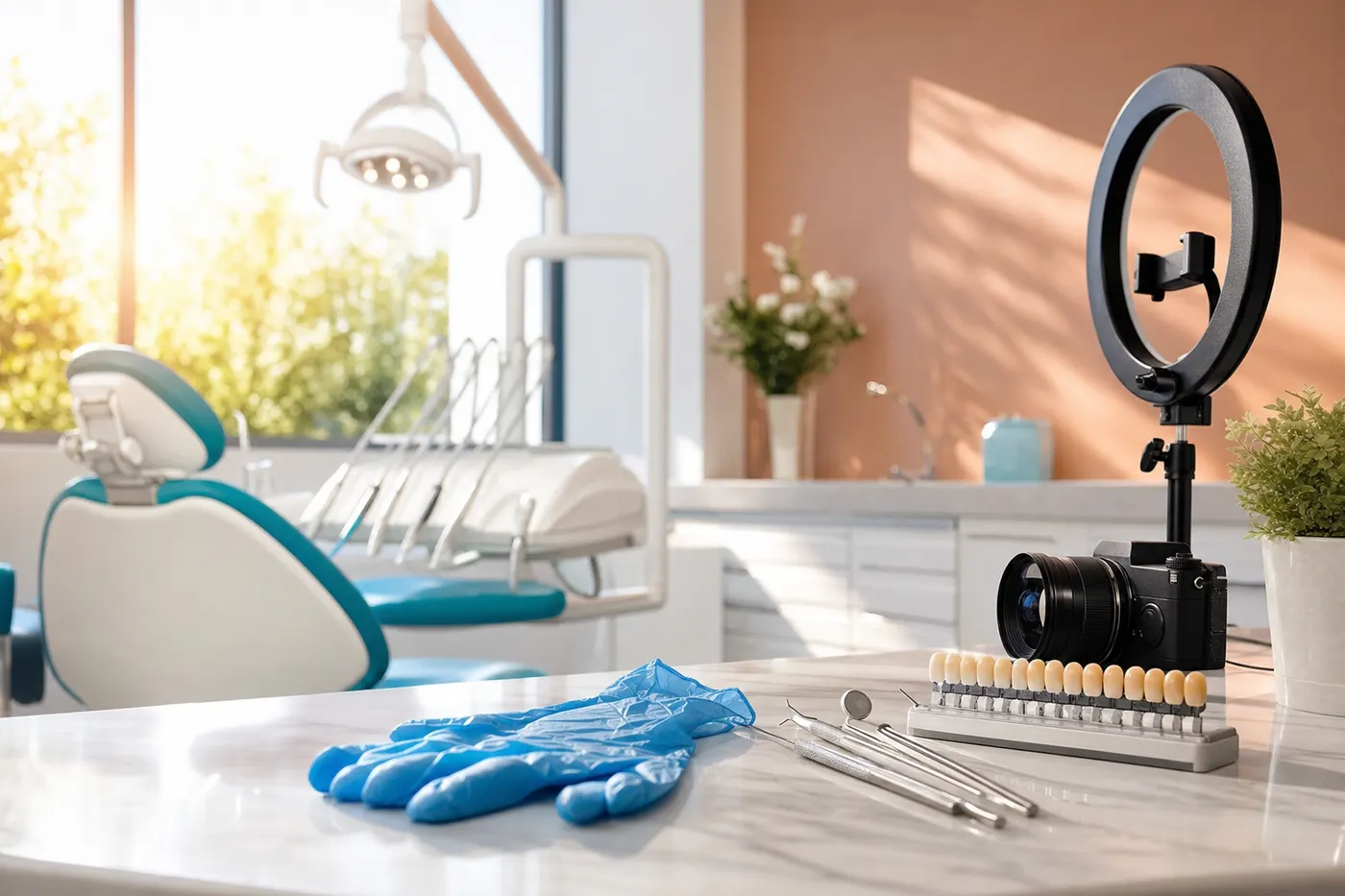
Social media works in dentistry because people want to see results and real people before they trust you. Before-and-after materials, a short reel of a whitening or a simple explanation of a procedure gather views and bookings. The problem is that these posts take time and consistency, and the practice always leaves them for last.
The agent prepares a posting plan by week, writes the copy and the captions and proposes topics based on what the practice treats most often and on the season. For materials with real cases, it prepares the draft post, but it does not publish anything involving a patient unless the consent is clear and the dentist has seen the final version.
The result is a steady presence, not five posts in one week and then two months of silence. The practice remains the one that sets the tone and approves, and the work of writing, framing and scheduling falls to the agent.
A clear report on what really brings in patients

The question a practice asks most often is where new patients come from. Many practices pay for several channels at the same time, Google, Facebook, referrals, and do not know which of them really works. Without this clarity, the promotion budget gets split by luck.
The agent pulls together the data from the Google profile, from campaigns and from the booking software and puts it into a report the practice can understand. You can see how many bookings came from local searches, how many from social media, how many from recall and how much it costs on average to bring in a new patient on each channel. No figures are invented. The report shows what the connected tools say.
With this picture, the practice can stop what brings nothing and put more where people respond. Marketing becomes a series of decisions based on real data, and the agent handles the gathering, ordering and preparing, so the dentist does not lose evenings building reports instead of resting.
Where a person stays in the loop
In dentistry, part of marketing touches sensitive areas, and there a person decides, not the agent. Any material that shows a patient’s case, a before-and-after photo or a treatment story, is published only after the patient’s explicit consent and after the dentist confirms that the medical information is presented correctly. The agent prepares, but it does not press publish on its own.
The same goes for reviews and complaints. A reply to a critical review can affect the practice’s reputation, so the agent proposes a version, and someone in the practice reads and approves it before it appears. No promises of medical results are made, and nothing sensitive about a patient is answered in public.
Budgets and paid campaigns also remain under human control. The agent brings the data, shows what works and what does not, proposes where it would make sense to put the money, but the decision to start a campaign or to increase the investment is made by the practice. That way, the repetitive work comes off the front desk’s shoulders, and the decisions that matter stay with people.
To what we sell
The most important link on the page. From here you go up to the agent we sell.
Related links
Sideways, on the same level, so you can move easily between pages.
Questions about the marketing agent in Dentistry
What exactly does an AI marketing agent do for a dental practice+
It takes over the repetitive marketing work: it sends recall messages and reminders through the practice software, such as dROOT or DentManager, keeps the Google Business Profile up to date, requests and manages reviews, prepares posts for Instagram and Facebook and gathers into one report where bookings come from.
Does the agent connect to the booking software we already use+
Yes. The agent works with the tools already in place in Romanian practices, such as dROOT, DentManager, AtriumApp or Dentintel, and uses their recall and SMS reminder features. It does not replace the software. It makes sure those features get used consistently.
Does the agent publish patient photos or review replies on its own+
No. Any material with a patient case, including before-and-after photos, is published only with the patient’s explicit consent and after the dentist sees the final version. Review replies and paid campaigns are proposed by the agent but approved by a person in the practice.
How do I know which marketing channel really brings me patients+
The agent gathers the data from Google, from campaigns and from the booking software into a clear report, which shows how many bookings come from local searches, from social media or from recall and how much a new patient costs on each channel. The figures come from the connected tools. They are not estimates.
Tell us what slows you down. We talk, then decide together whether and how we work.