AI video agent for dental offices and dental clinics
An AI video agent for a dental office turns the questions the front desk hears every day into short clips for Instagram, TikTok and YouTube. It writes the script, cuts the footage the dentist shot on a phone, adds subtitles and prepares every format. The dentist reviews everything clinical, and nothing goes live without their approval.

What a video agent takes over in a dental office

Video works in dentistry because people are afraid of the unknown. A patient who has seen what a cleaning looks like, or what happens at a first consultation, arrives calmer and puts things off less. The problem is that nobody in the office has time to write, edit and post. The dentist has patients, the assistant is at the chair, the front desk is on the phone. The AI agent takes over everything around the filming, so the dentist spends a few minutes in front of the camera, not a whole afternoon.
Collects the questions that keep coming up at the front desk and in messages and turns them into clip ideas, from “does scaling hurt?” to “how long does an implant take?”
Writes short scripts the dentist can say in their own words, plus a list of shots to film in the office
Cuts long footage, for example a ten-minute explanation about implants, into several vertical clips that make sense on their own
Adds Romanian subtitles, prepares versions for Reels, TikTok, YouTube Shorts and the Google profile, then writes the descriptions
In short, the dentist brings the expertise and the face patients already know, and the AI agent brings the rhythm. Without it, clips appear whenever someone has a free evening. With it, they appear steadily, on topics patients actually search for before they call.
Tell us what slows you down. We talk, then decide together whether and how we work.
What a week with the video agent looks like

On Monday morning, the AI agent sends the dentist three short scripts, each on a single question. Between two patients, the dentist films on a phone, in the treatment room, under the working light. No studio is needed, and no memorized text either. The footage goes into a shared folder, where the AI agent picks it up without anyone having to email it over.
On Tuesday, the AI agent edits. It trims the pauses, adds the subtitles, the logo and a closing card that explains how to book. On Wednesday, the dentist gets the versions and approves them or asks for a fix, for example a term that came out too technical or a sentence that could sound like a guarantee. On Thursday and Friday, the clips go out on schedule, at the hours when the office’s followers are active.
Meanwhile, comments come in. Anyone asking about opening hours, parking or Saturday appointments gets a practical answer. Anyone describing pain or asking whether they need a treatment gets an invitation to book a consultation, and the message reaches the front desk. At the end of the week, the AI agent shows which clips brought messages and appointments, not just views.
The tools the video agent works with
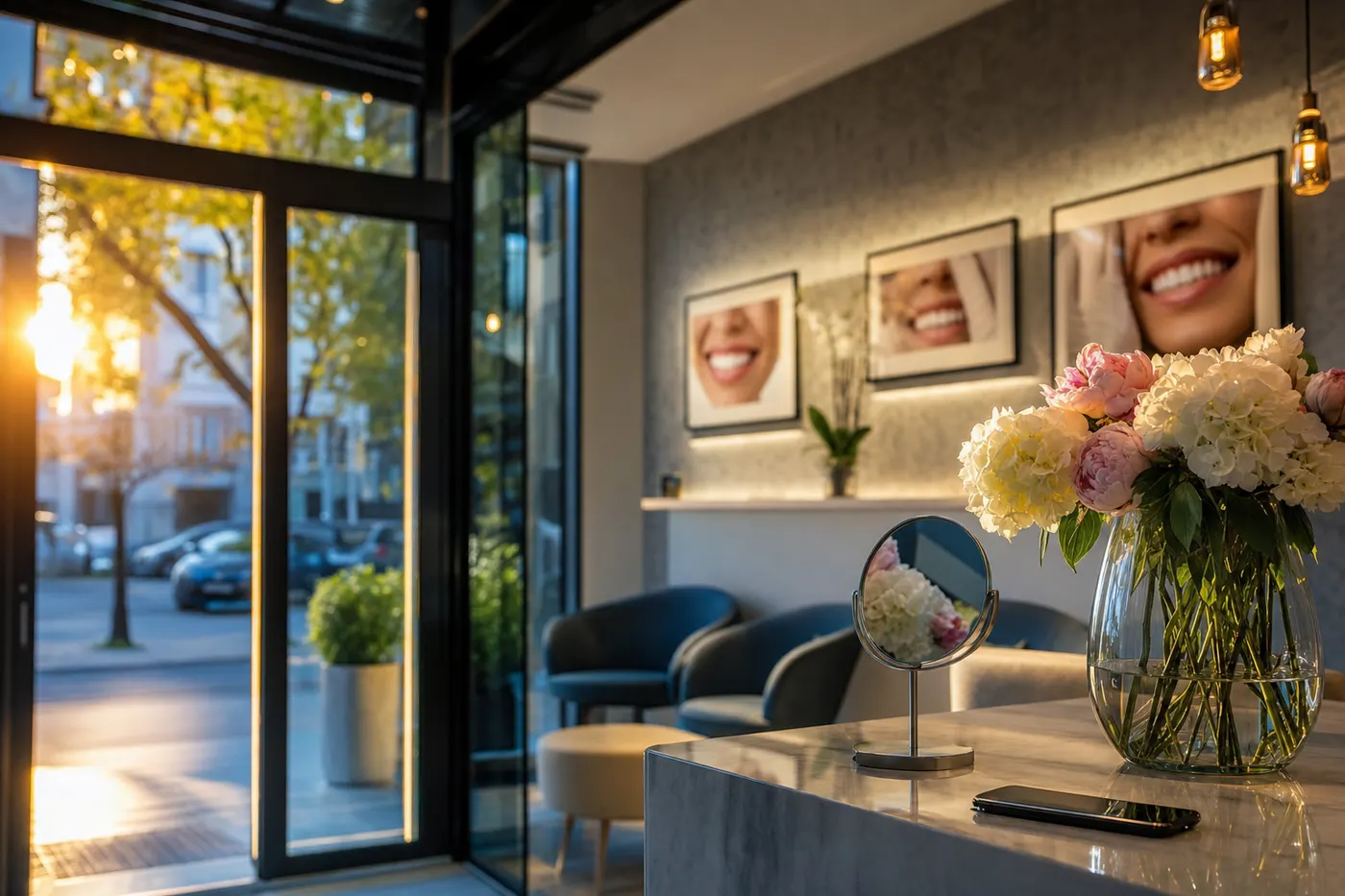
The AI agent doesn’t ask for new equipment. It works with the phone the dentist already owns and with the tools many Romanian dental offices already use for social media.
CapCut or the Canva video editor, for editing, subtitles and vertical formats
Meta Business Suite, for scheduling clips on Facebook and Instagram
TikTok and YouTube Studio, for Shorts and for longer explainers
Google Business Profile, where a short clip from the office helps someone searching for a dentist nearby
Google Drive, as the archive for raw footage and for the consent forms patients have signed
The link to the practice software, whether dROOT, DentManager or another system, stays indirect. The AI agent never opens patient files. It only gets general information from the front desk, for example which treatments are most requested this month, so it can pick the topics that matter right now.
Patients on camera and before and after clips
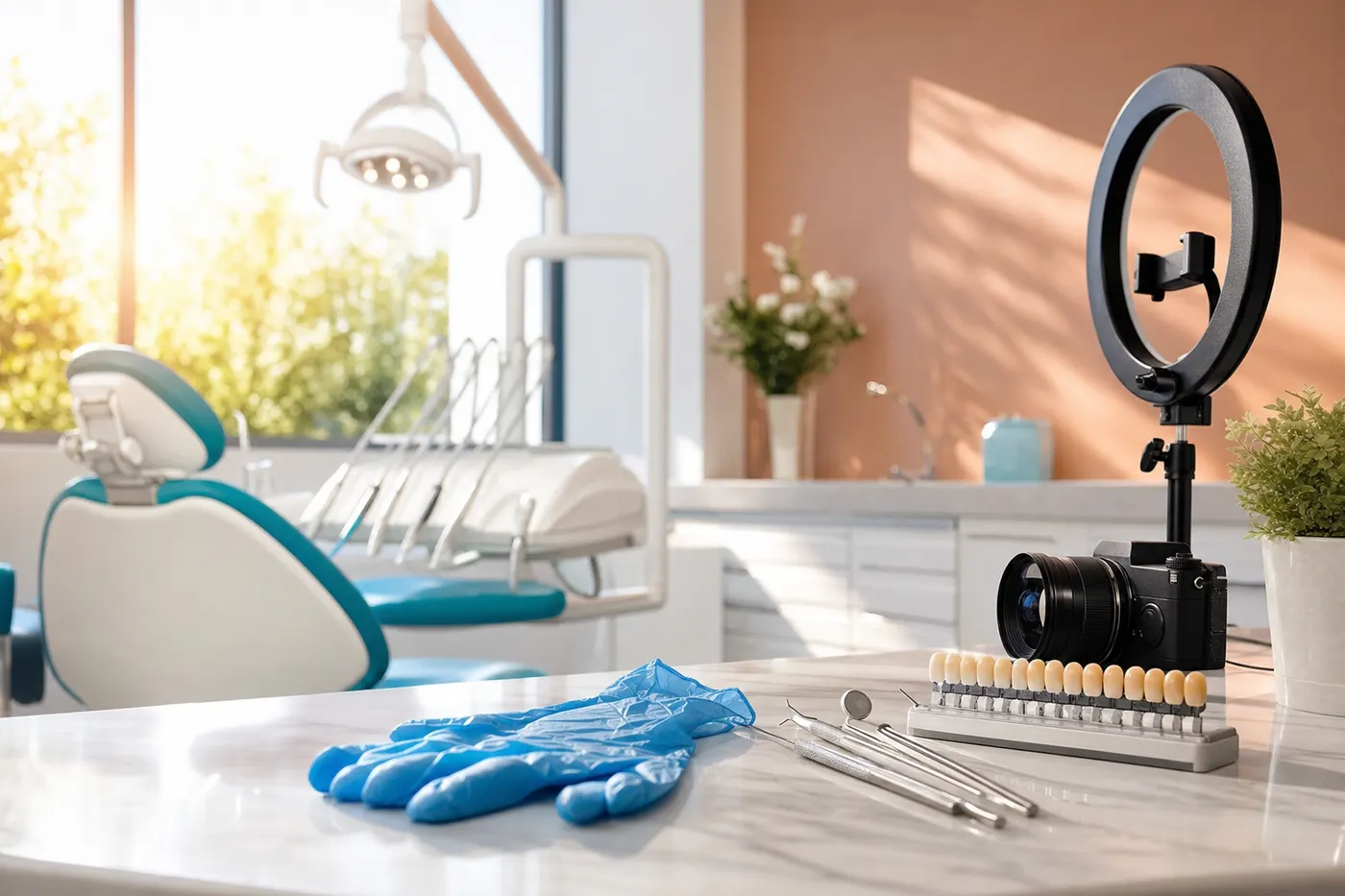
The most watched dental clips show real people. That is exactly where the most delicate part lies. Images of a patient’s teeth, an X-ray or a finished restoration are health data, and GDPR treats them as sensitive data.
That is why the AI agent keeps track of consent. No footage showing a patient goes into an edit without their written consent, stored in the shared folder. If the patient agrees to show only the smile, not the face, the AI agent frames only the smile. If they withdraw consent, the AI agent finds every clip they appear in and takes it down everywhere.
With treatment results, the AI agent doesn’t embellish anything. It applies no filters to teeth, doesn’t change the shade and doesn’t combine shots to make a result look more spectacular. A before and after clip shows exactly what happened, with the same light and the same angle, or it isn’t published at all.
What the video agent does not do

It doesn’t film and doesn’t pose as the dentist. It creates no avatars and never clones the dentist’s voice
It doesn’t explain diagnoses or recommend treatments, neither in clips nor in comments
It doesn’t publish a patient who hasn’t given written consent, not even with the face hidden
It doesn’t promise results and doesn’t compare the office with other practices in town
A generated voice is used only where it can’t cause confusion, for example in a clip about how to get to the office or what the waiting room looks like. When the topic is a treatment, the dentist speaks, in their own voice.
How you get started with video in the office
It starts with a list. For one week, the front desk writes down the questions it hears most often, and the AI agent turns them into the first series of scripts. The first clips are simple: how the first visit goes, what to bring, what the office looks like. They need no real cases and no consent forms, so they can start right away.
Once the rhythm is working, you add the cutting of longer footage and, with consent forms up to date, the clips showing results. Each step is small and reversible. If a format brings no messages, it gets stopped and another one is tried.
The AI agent writes, edits and schedules. The dentist approves everything that gets published, and the clinical side stays entirely theirs.
Where a person steps in on dental video
The dentist approves every script before filming and every edit before publishing. They check that the explanation is clinically correct and doesn’t sound like a promise of results. The code of ethics for dentists, issued by the College of Dentists in Romania (Colegiul Medicilor Stomatologi din România), sets limits on medical advertising. The AI agent writes within them, but the dentist has the final word.
A person also decides which real cases appear and discusses consent with the patient, face to face. Replies to comments that touch on a specific case or a complaint go through someone in the office. And if a clip is going to be promoted with paid budget, the amount is set by the practice manager, not by the AI agent.
To what we sell
The most important link on the page. From here you go up to the agent we sell.
Related links
Sideways, on the same level, so you can move easily between pages.
Questions about video in dentistry
Does the dentist have to appear in every clip?+
Not in every one, but in the ones about treatments, yes. Patients want to see who will treat them, and a medical explanation only carries weight when the dentist gives it. Clips about opening hours, location, parking or how a booking works can be made with the assistant, the front desk or just footage of the office. The AI agent splits topics so the dentist films a little and often, not a lot and rarely.
Do we need a professional camera or a studio?+
No. A recent phone, the light in the treatment room and a small clip-on microphone are enough for vertical clips. The AI agent sends the shot list in advance, so filming takes little time and doesn’t block the chair. It handles the editing, subtitles and formats itself, so nobody in the office has to learn editing software.
Can we use footage of our own patients?+
Yes, with their written and explicit consent for publication, separate from the consent for treatment. Images of teeth, X-rays or restorations are health data. The AI agent keeps track of consent forms, uses only what was approved and pulls clips from circulation if the patient changes their mind. The dentist sees the final version before anything is published.
Who replies to the comments under the clips?+
The AI agent answers practical questions, such as opening hours, the address or how to book an appointment. Any comment describing a symptom or asking for a medical opinion gets an invitation to a consultation, and the message is passed to the front desk. Negative comments, or comments about a specific case, are seen by a person in the office before any reply goes out.
How do we know whether video brings us patients?+
The AI agent doesn’t stop at views. It tracks how many messages and appointments start from each clip, through the link in the description, direct messages and what patients tell the front desk when asked how they heard about the office. The report shows which topics bring people into the chair, so you film more of them.
Tell us what slows you down. We talk, then decide together whether and how we work.