AI video agent for your online store, from script to finished product clip
An AI video agent for an online store turns the catalog into short product clips. It writes the scripts from the product sheet, cuts raw footage into versions for TikTok, Reels and the product page, adds captions and voice-over and gets everything ready to publish. Filming and final approval stay with the people in the store.
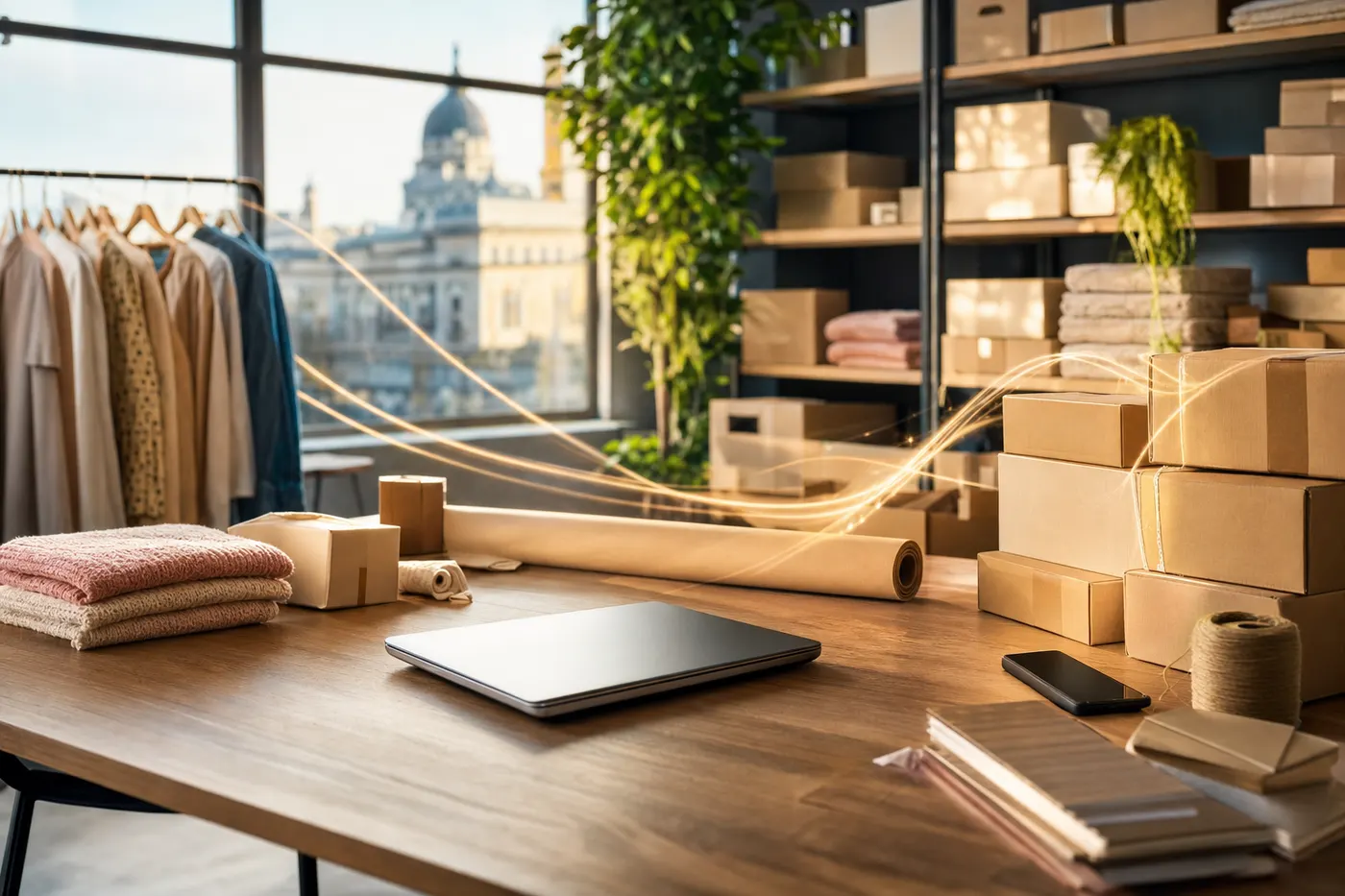
What the video agent takes over in an online store

In an online store, video always sits on the “we’ll get to it” list. You have hundreds of products, photos sent by the supplier and a phone full of raw footage nobody has edited. Between orders, couriers and returns, editing is the first thing to be postponed. The AI agent takes over the work before and after the shoot. It decides what is worth filming, writes what gets said and pulls everything usable out of each shot.
Writes short scripts for product clips, starting from the product sheet in the platform: what it is, who it suits, how it is used, which sizes and colors exist
Cuts raw footage into several versions: a vertical clip for TikTok, Reels and YouTube Shorts, a square clip for ads, a silent version for the product page
Adds Romanian captions, on-screen titles and generated voice-over where nobody speaks in the shot
Builds the shot list for the following week, focused on products with stock, a healthy margin and plenty of customer questions
Ties each clip to its product, with description, tags and link, ready to schedule
The win is not a viral clip. It is the fact that the products that matter end up with video, one after another, without anyone spending their evenings in an editing app. And a customer who has seen the product in motion, held in someone’s hand, at its real scale, knows better what they are ordering. Many returns start with a photo that didn’t say enough about size, material or color.
Tell us what slows you down. We talk, then decide together whether and how we work.
What a normal working week looks like

On Monday, the AI agent looks into the platform. Which products came in, what is back in stock, what sells well and still has no clip. It also looks at the messages that reached support. If several people asked how a shelf is assembled or how big a bag looks on the shoulder, a clip is missing there. All of this produces the shot list, with the shots needed for each product, written plainly for the person holding the phone.
Someone on the team does the filming, usually in a single session, on the packing table or in a corner with good light. The files go into a shared folder. The AI agent picks them up from there, sorts them by product and edits the versions: a presentation clip, a “how to use it” clip and a short one for ads.
By Thursday you have the batch of clips waiting, with copy and captions. You watch them, reject what doesn’t look right and ask for changes in a single line of text. On Friday, whatever you approved goes into the publishing calendar. At the same time, the AI agent notes which of last week’s clips brought visits to the product page and which were ignored, so the next list starts from what worked.
During peak periods
Before Black Friday, Christmas or March 1 and March 8, the rhythm changes. The AI agent starts preparing a few weeks earlier, working from the list of products going on offer. On the busy days, the team packs parcels instead of editing clips. Everything that needed to be filmed and approved is already scheduled.
The tools it connects to

The AI agent works on top of what you already have. It reads products, stock, prices and photos from the store platform, whether that is Shopify, WooCommerce, GoMag or MerchantPro. Without this connection it would write scripts about products that are no longer in stock or show an outdated price.
CapCut and Canva, for editing, templates and the formats each platform requires
ElevenLabs, for Romanian voice-over where the clip needs narration
Google Drive, for raw footage and for the archive of approved clips
TikTok, Instagram and YouTube, for scheduling and publishing, after approval
Meta Ads and TikTok Ads, where approved clips become ad variations
For the product page, the clip is uploaded straight into the platform or through YouTube, depending on how the store theme is built. The same clips also reach the newsletter, through your email platform, as an image linking to the video. All the accounts remain yours, and the AI agent only gets the access it needs for editing and scheduling.
What the video agent does not do

It doesn’t film. The product has to be held, placed in good light and shown by a real person. The AI agent tells you which shots are missing and how to get them, but a person holds the phone.
It doesn’t invent images of the product. A generated clip that shows a dress differently from how it really looks brings returns, not sales. The image of the product comes from real footage and photos. Generation is used for backgrounds, titles, voice-over and captions, meaning everything that sits around the product.
It doesn’t promise views and doesn’t guarantee that a clip will take off. It can tell you what has worked so far on your account and repeat the format. It doesn’t copy other stores’ clips and doesn’t use music, images or people’s faces without usage rights.
How you get started

You start small. You pick a handful of products that sell well and get a lot of questions. We connect the AI agent to the platform and to the footage folder. Then we agree together on what a clip from your store looks like: tone, length, font, colors and the things that are never said. After that you run the first filming session, following the list you received.
You check all of the first clips, one by one. After a few rounds you know what you usually reject, and your remarks become rules in the setup. From there you widen the list: the next category, the seasonal clips, the versions for ads.
The cost depends on how many departments the AI agent covers and on the editing and voice tools you choose. We show them to you transparently before you start.
Where a person steps in on product video
No clip is published before someone in the store has watched it. The rule is simple and not up for negotiation, because a wrong video is far more visible than a wrong line of text and travels faster.
Above all, a person approves what the clip promises. If the script says a case is waterproof or a cream helps with something specific, someone who knows the product confirms the label says the same. For supplements, cosmetics and children’s products the check is even stricter, because claims about effects are regulated. Prices and discounts shown on screen are checked too, so an expired offer doesn’t linger on TikTok.
A person also decides which music is used, whether a colleague’s face appears and whether footage received from a buyer can go into the edit. For content coming from customers, consent is requested beforehand, in writing. The AI agent only prepares the request message and keeps track of the replies.
To what we sell
The most important link on the page. From here you go up to the agent we sell.
Related links
Sideways, on the same level, so you can move easily between pages.
Questions about video in eCommerce
Do I need a studio or filming equipment?+
No. A good phone, natural light and a clean background are enough for product clips. The AI agent gives you the shot list, so the filming session stays short and you don’t forget anything. If you already work with a videographer, the AI agent takes the raw material from them and builds the versions for each platform, with captions and on-screen text.
Can it make clips from product photos alone, without filming?+
Yes, for certain formats: presentations with photos in motion, on-screen text and voice-over. They are useful when the catalog is large and you cannot film everything. Still, a clip where the product is held and used is more convincing and answers the questions about size and material. That is why we recommend real footage for your main products.
Who publishes the clips on TikTok and Instagram?+
The AI agent schedules them, but only after someone in the store has approved them. You see the clip, the copy and the date, then you release it or ask for a change. If you prefer to publish by hand, you get the finished package in the shared folder, with a description and tags for each platform. Either way, nothing goes public without a yes from you.
Can I use footage I receive from customers?+
Yes, with their consent. The AI agent finds the clips and photos where customers mentioned the store, prepares the message asking for permission and keeps track of the replies. Without clear consent, the material doesn’t go into the edit. The decision to use a clip or not stays with you, especially when faces or children appear in the shot.
What happens to a clip when the product goes out of stock or changes price?+
The AI agent sees the change in the platform. Clips scheduled for a sold-out product are stopped, and the ones showing an old price are flagged to be redone. For ads it proposes pausing the variation, and you confirm. That way you are not left with a video sending people to a page with no stock or to an offer that no longer exists.
Tell us what slows you down. We talk, then decide together whether and how we work.