AI video agent for auto repair shops that already film in the workshop
An AI video agent for an auto repair shop turns the footage your team shoots on their phones in the workshop into short clips ready to publish. It writes the script, cuts the material, adds subtitles and prepares the formats for Instagram, TikTok, YouTube Shorts and Google Business Profile. The filming, the mechanic who explains and the approval of every clip stay with the people in the shop.
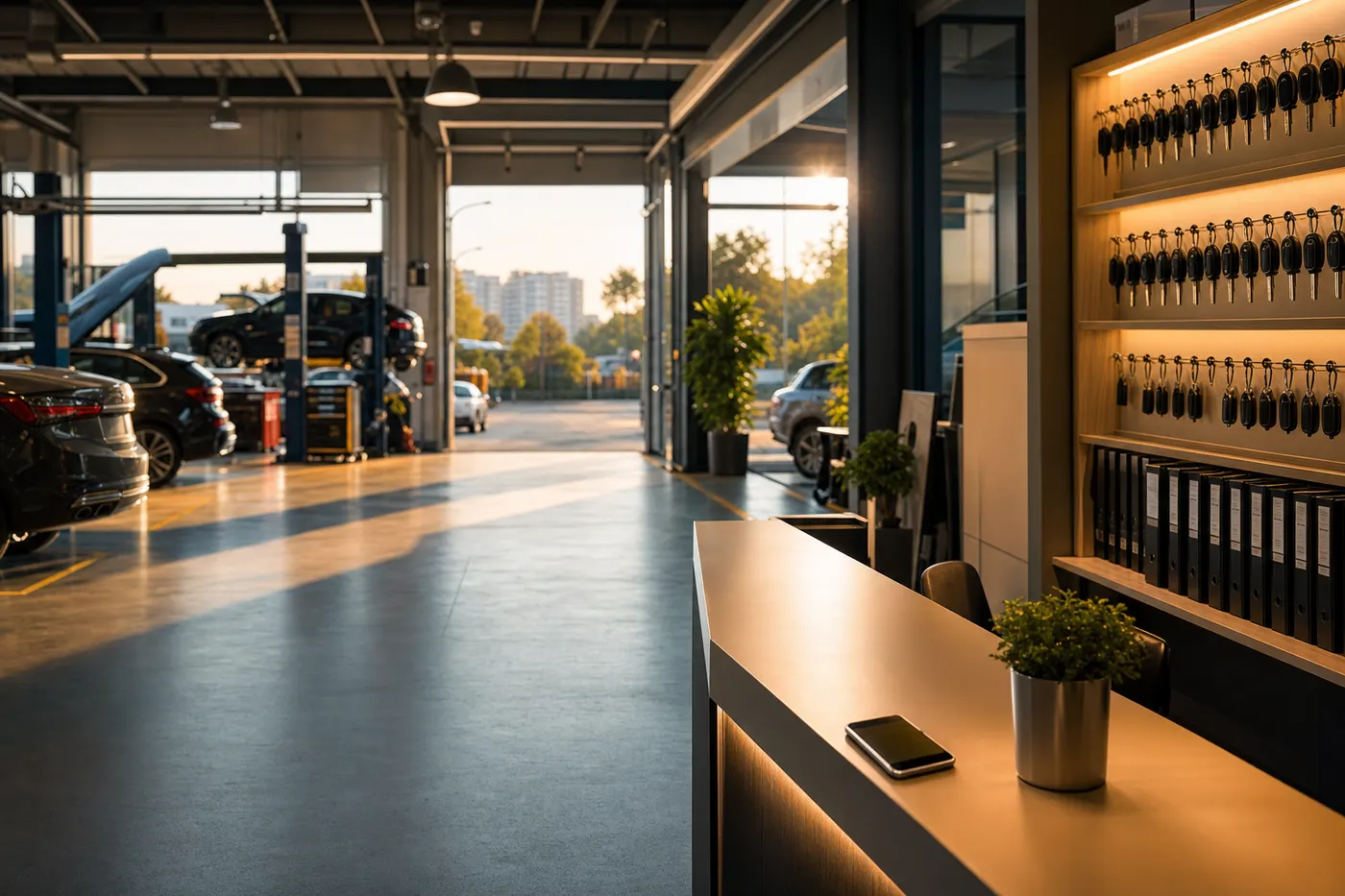
What the video agent takes over in an auto repair shop
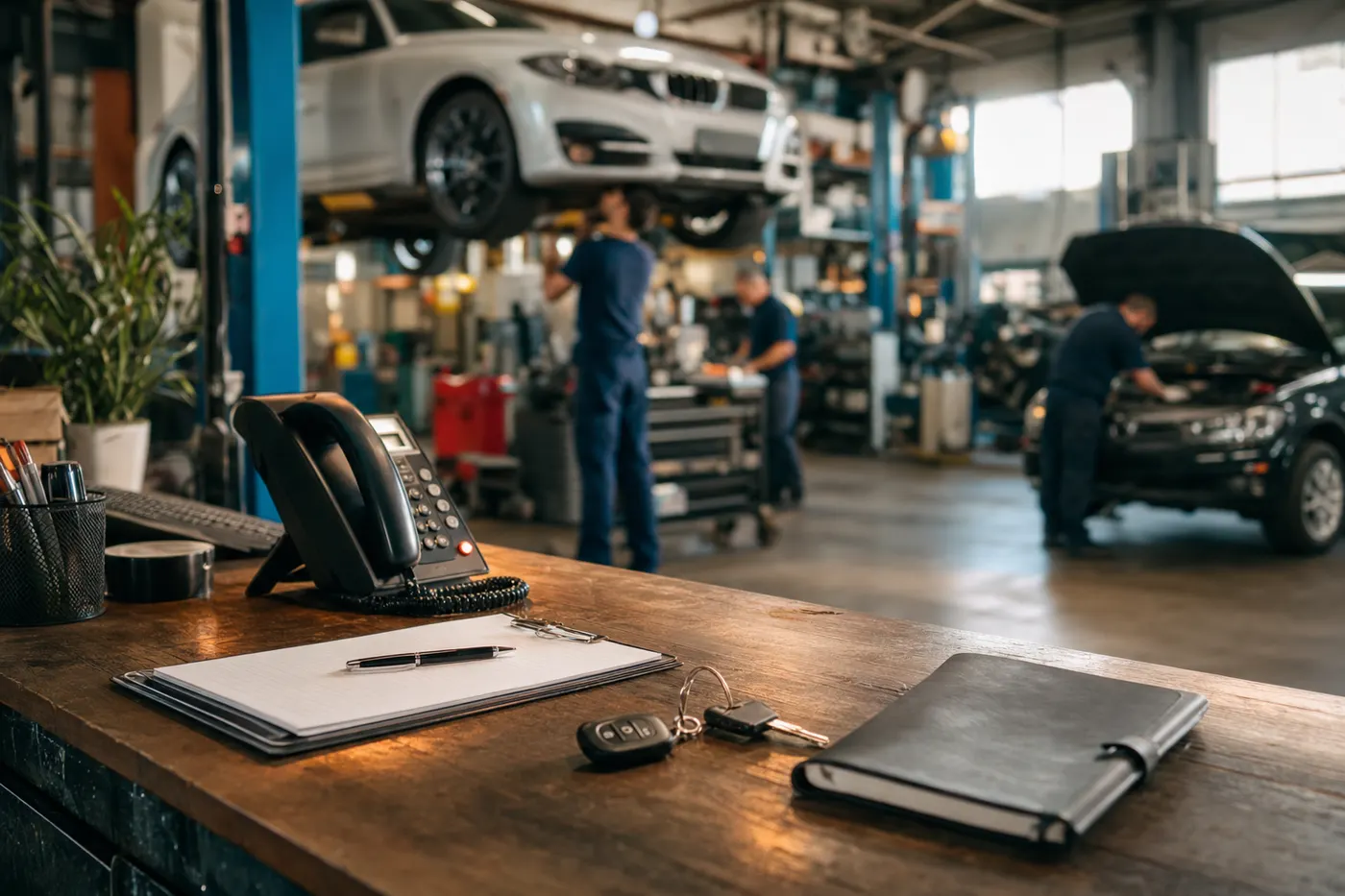
In an auto repair shop, video material practically makes itself. A mechanic films worn brake pads to show the customer. The front desk gets a WhatsApp clip of an oil leak under a car. Someone catches an engine taken apart on the bench or a freshly replaced timing belt on their phone. All of it stays on phones and in chats, while the shop’s Facebook page still shows a post from last spring.
The AI video agent takes over everything between the raw footage and the published clip. It doesn’t show up with a camera and it doesn’t invent images of your workshop. It works with what you film, with what you know about the jobs and with the questions customers ask at the front desk every single day.
Collects the footage the mechanics send in and sorts it by type of job: brakes, timing, air conditioning, tires, diagnostics, bodywork
Writes short scripts for explainer clips, along the lines of “what a brake disc that needs replacing looks like” or “what we check before a long drive”
Cuts long footage into vertical clips, adds Romanian subtitles with proper diacritics and puts a clear title on screen
Prepares every clip in the format Instagram Reels, TikTok, YouTube Shorts and Facebook expect, with a caption, a cover and a call to book
Flags license plates, faces and documents that appear in the frame so they get blurred before a clip ever reaches approval
Tell us what slows you down. We talk, then decide together whether and how we work.
The clips that actually bring cars into the shop
A repair shop doesn’t need viral clips. It needs the person down the street who searches for a brake shop on Google or scrolls Facebook in the evening to see that the people working there know what they’re doing. The most useful clips for a workshop are the ones that explain, not the ones that entertain.
The agent suggests topics based on what really happens in the shop and what customers keep asking. In the fall, clips about winter tires, batteries and wiper blades. In the summer, recharging the AC and checking the coolant. Before the periodic technical inspection, what’s worth fixing so the car doesn’t fail. All year round, before and after clips of bodywork, paint jobs or restored headlights.
There’s one more kind of clip that rarely gets made and helps a lot: the explanation for the customer. The mechanic films the worn part, the agent adds a simple subtitle and marks the problem area, and the front desk sends the clip on WhatsApp along with the approved estimate. The customer sees with their own eyes why the part has to be replaced, and the conversation about money gets easier for everyone.
What a normal week with the video agent looks like
On Monday morning, the agent goes through the shared folder where the mechanics uploaded last week’s footage. It sorts the files, drops the shaky or badly lit shots and sends you a short list: which clips can be made from the existing material and what still needs to be filmed.
On Tuesday and Wednesday it builds the clips themselves. It writes the copy for each one, cuts the sequences, adds subtitles and creates the vertical version. If a mechanic explains something on camera, the agent transcribes exactly what they say and checks that the subtitles are faithful, without adding technical claims the person never made.
On Thursday you get the package for approval: the clips, the captions and a suggested publishing day for each. You or the shop foreman take a look, fix a technical term, cut a shot showing a car that shouldn’t be there. On Friday and over the weekend, the approved clips go out on the agreed schedule, and the agent notes which ones brought in comments or booking messages.
If nothing got filmed in a given week, the agent doesn’t fill the gap with generated images. It tells you what’s missing and gives you a list of short shots to grab on the next car that goes up on the lift.
The tools it connects to
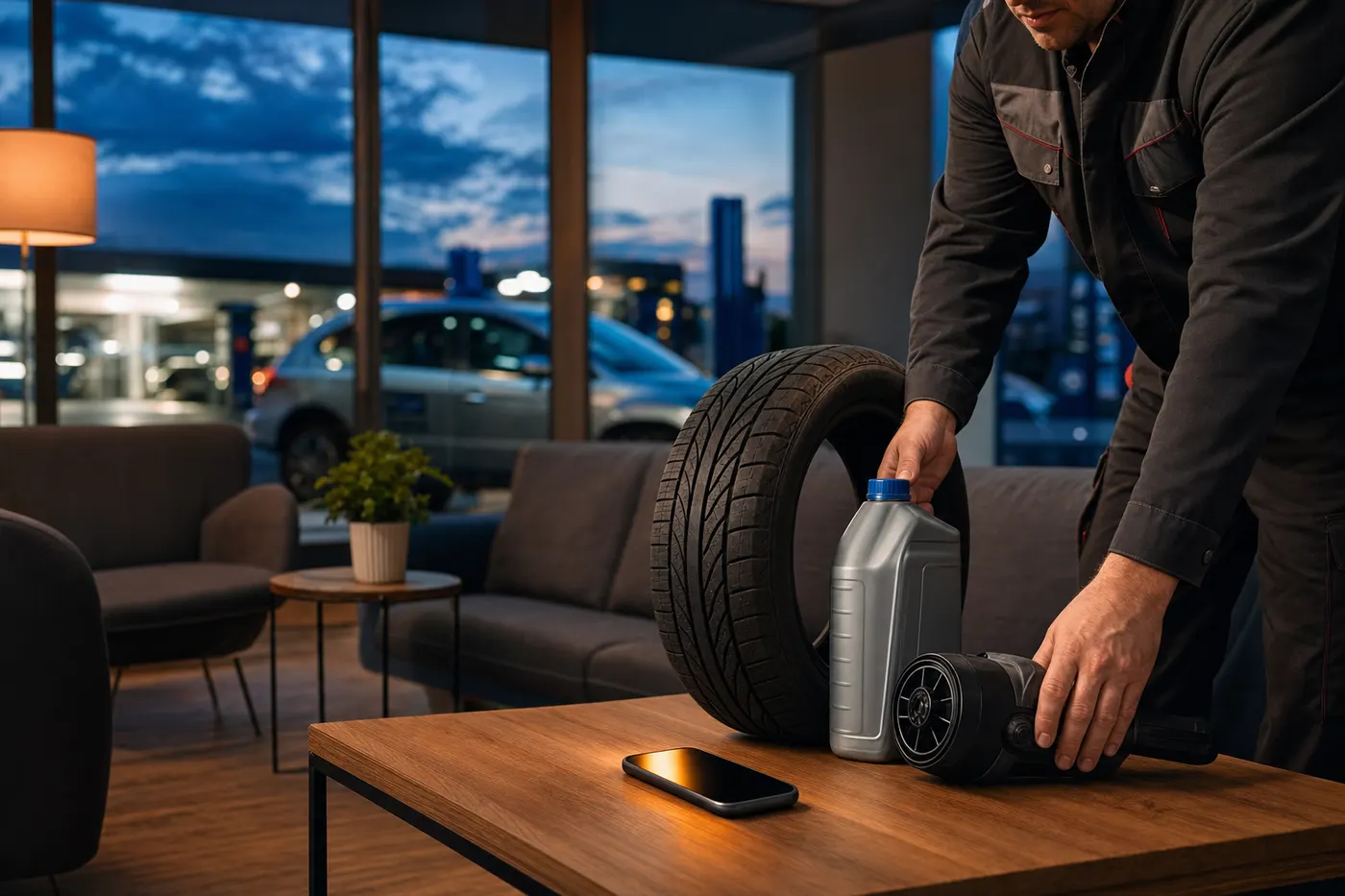
The agent works where the footage already lives and where it gets published. It doesn’t ask for a new platform for the workshop and it doesn’t force the mechanics to learn yet another program.
Google Drive or Dropbox, as a shared folder where mechanics upload footage straight from their phones
WhatsApp Business, where the front desk saves clips received from customers or prepared for them
CapCut, for vertical editing, subtitles and the Reels and Shorts formats
Meta Business Suite, for scheduling clips on Facebook and Instagram
TikTok and YouTube Studio, for short clips and for longer explainers
Google Business Profile, where workshop clips show up next to your reviews right when someone searches for a repair shop nearby
From the shop management software you already use, such as ServiceMonitoro or Manager Service Auto, the agent can see which types of jobs came in most often last month. That way it suggests clips about what actually brings cars to you, not about whatever it happens to find interesting.
What the video agent doesn’t do
It doesn’t film and it doesn’t replace the person holding the phone in the workshop
It doesn’t generate images of jobs you never did and it doesn’t pass off other people’s cars as your own work
It doesn’t make a mechanic say things, through a generated voice, that they never said
It doesn’t diagnose a car in a clip based on a noise or a symptom someone describes in the comments
For comments like “mine makes a noise when I brake, what could it be?”, the agent drafts a reply that invites the person in for an inspection at the shop. It doesn’t guess the cause. A repair shop that diagnoses cars on TikTok takes on a risk it has no reason to take.
How to get started with video in your shop
You start with one thing: a shared folder and the habit of mechanics filming a few seconds whenever something interesting is up on the lift. The agent tells you which shots it needs, with the phone held vertically and in good light, and builds the first clips from what’s already sitting on your phones.
For the first few weeks you stick to a simple format, short explainer clips approved by the shop foreman. Once the rhythm holds, you add clips for Google Business Profile, the ones sent to customers with the estimate and a seasonal series. You choose the next step after you see which clips bring in booking messages, not by how many views they collected.
Where a person steps in on video for auto repair
Every technical claim in a clip goes past a mechanic or the shop foreman. A clip that gets wrong how long a brake pad lasts or what a warning light on the dashboard means damages exactly the credibility you’re trying to build.
A person also decides which cars and which people appear on screen. The customer who left their car for repairs never agreed to show up on the shop’s TikTok. License plates, faces and car interiors get blurred or cut, and if you want to feature a specific car, you ask the owner for consent first.
You set the prices and offers that appear in clips. The agent never puts an amount on screen that it worked out on its own for an oil change or a wheel alignment. Likewise, publishing only starts after you’ve approved the clip in its final form.
To what we sell
The most important link on the page. From here you go up to the agent we sell.
Related links
Sideways, on the same level, so you can move easily between pages.
Questions about video in auto repair
Do I or the mechanics have to appear in the clips?+
It isn’t required, but it helps. Clips where a real mechanic shows the part and briefly explains what happened are the most credible kind for a repair shop. If the team doesn’t want to be on camera, the agent builds clips with only hands, parts and subtitles. What it won’t do is invent a mechanic or use a voice that pretends to be yours.
What happens with customers’ cars that show up in the footage?+
In every clip, the agent flags license plates, faces and any document or screen with personal data so they get blurred before approval. If you want to showcase a job on a specific car, a restoration for example, you ask the owner for consent. The agent can draft the request message for you, but the consent stays a conversation between you and your customer.
Can I use the clips to show customers what broke?+
Yes, and it’s one of the most useful ways to use them. The mechanic films the worn part, the agent adds the subtitle and marks the area, and the front desk sends the clip on WhatsApp together with the estimate you approved. The customer understands why the job needs doing. The agent doesn’t send the clip on its own and doesn’t add price estimates to it.
How often should I publish clips?+
As often as you can sustain with real footage. For a repair shop, a steady rhythm of a few clips a week is more useful than a burst in one month followed by silence. The agent suggests the calendar based on the material you have and the season, and if nothing got filmed, it tells you what’s missing instead of filling the gap with generic content.
Does the agent reply to comments under the clips?+
It drafts replies to the questions that keep coming up, such as opening hours, the address or how to book, and sends them for approval or follows a template you approved once. For technical questions about a specific car, it doesn’t diagnose anything. It invites the person in for an inspection at the shop and hands the conversation to the front desk.
Tell us what slows you down. We talk, then decide together whether and how we work.