AI marketing agent for a restaurant or a cafe
In a restaurant or a cafe, marketing happens between tables, not at a desk. A post to write when it’s quiet, a review that should get a reply, a promotion to announce before the weekend. They are the first things to drop when the venue fills up. An AI marketing agent takes over the repetitive part and keeps it steady, and you confirm what goes public. Below you can see what we connect and where the decision stays with you.
One department, one industry. Below are the pages for each technical side and everything we connect to the agent.
- 1Marketingthis very page
fixed
- 2HoReCathis very page
fixed
- 3tool / API / model / integration
see the pages below
Marketing capabilities in HoReCa
Each part of the marketing work, on its own page, shaped for HoReCa.
What a marketing agent takes over in a venue
People come to a venue from three places: they found you on Google while looking for somewhere to eat, they saw you on Instagram or TikTok, or a good review sent them. All three demand constant work, exactly the kind of work that stops when the dining room is full and the kitchen is flat out. The agent takes over that part, so your presence runs the same no matter how busy the evening is.
In concrete terms, a marketing agent for HoReCa handles four things that usually fall on the owner or on a busy freelancer:
Keeps reviews in view: it tracks them on Google, Facebook and TripAdvisor and prepares a reply to each one.
Produces social media content starting from what you have in the venue: dishes, atmosphere, people, promotions.
Announces promotions, events and the new menu at the right moment, not after they have passed.
Keeps in one place which channel brings real customers, so your promotion budget goes where it works.
Tell us what slows you down. We talk, then decide together whether and how we work.
The reviews that fill your venue
For a restaurant, reviews aren’t a detail, they are the shop window. A venue with four stars or more on Google, Facebook and TripAdvisor sells more on online recommendation alone, because the person looking for somewhere to eat tonight checks the stars and the comments before anything else. One bad review left unanswered weighs far more than ten good ones ignored.
The agent tracks reviews on every platform and prepares a reply for each one, calm and in the venue’s tone, especially for the critical ones, where a good reply matters most. It flags in time a problem that keeps coming up in the comments, so you fix it before it becomes a pattern. And satisfied customers, asked at the right moment, are more likely to leave a good review, which in turn brings the next occupied table.
Content that makes people come in, not just hit like
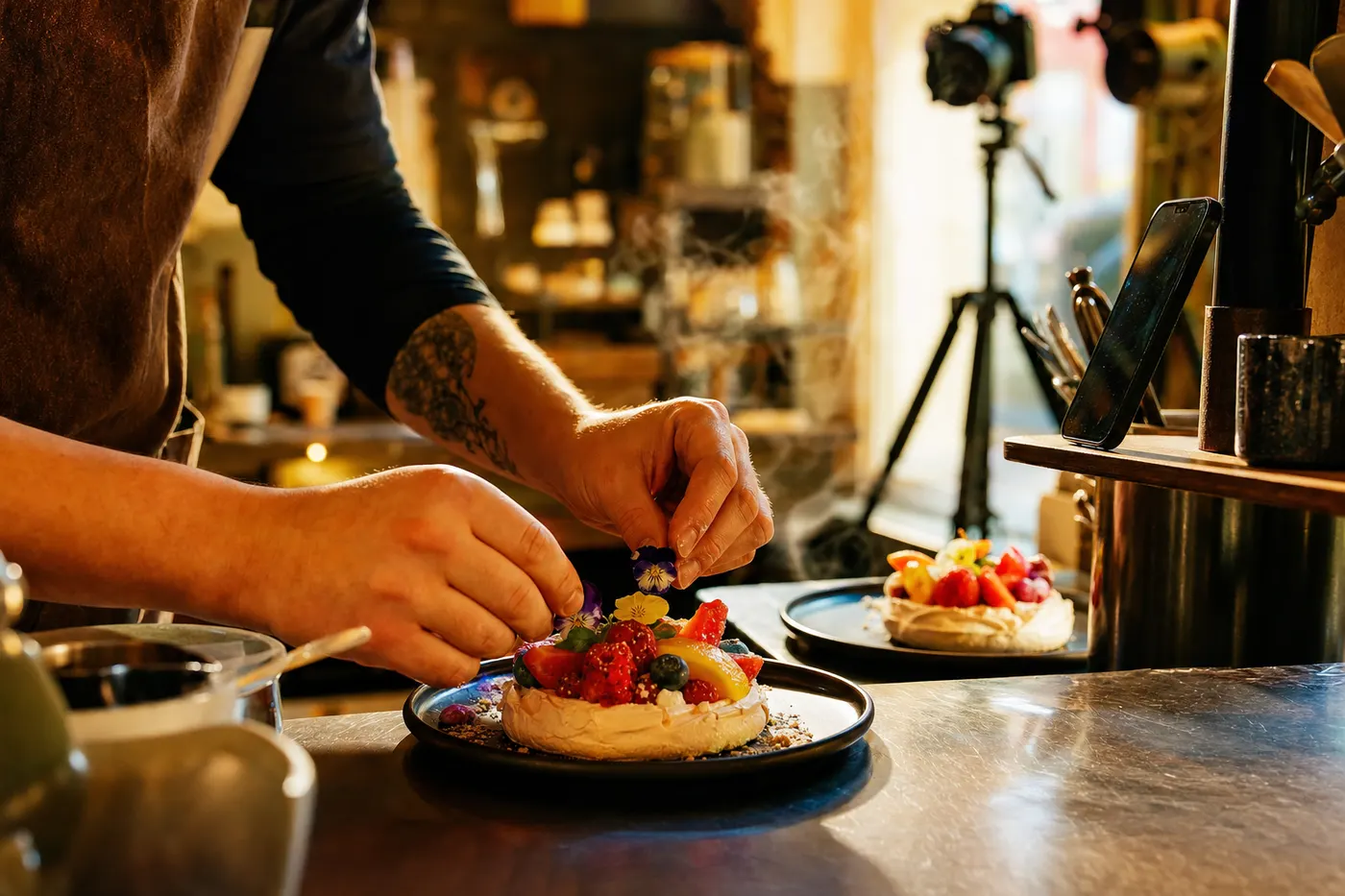
On Instagram and TikTok, food sells if it’s shown well. A short reel of a dish, a story from the kitchen, the Friday night atmosphere, all of these attract more than a static photo of the menu. The problem is that nobody has time to film, edit and post consistently, precisely when the venue is doing well.
The agent starts from what you already have, the dishes and the moments in the venue, and turns them into content for Instagram, Facebook and TikTok, with captions and scheduling. It keeps the page on rhythm even in the packed weeks, when everything usually stops, and gets several formats out of the same dish: a post, a story, a short video script. You choose the tone and what to push, the agent handles production and the calendar.
Ads that bring in people from the area
A restaurant doesn’t need national fame. It needs the people within a few kilometers, exactly when they are looking for somewhere to eat. This is where Google Search and Maps do the work, for people searching with intent, plus Instagram and Facebook for local visibility and remarketing to those who looked but haven’t come yet.
The agent writes the ad copy, proposes variations and tracks daily where the budget goes and what brings real customers, not just impressions. It doesn’t set budgets and it doesn’t spend on its own, the limits stay with you, but it puts the missing number on the table so you stop paying for a campaign that looks good in the report but doesn’t fill tables.
What changes in the first month of being present online
The first thing that changes is consistency. Reviews get replies, the social media page no longer goes quiet for two weeks when the venue is full, and promotions are announced before the weekend, not after. A venue that always looks active online is a venue people trust enough to visit.
The second is clarity. At the end of the month you see which channel brought real customers, not just impressions or likes, so the promotion budget goes where it actually fills tables. Decisions about where to invest stop being made on gut feeling.
We don’t promise it will fill the venue by itself. Good food, service and atmosphere remain yours, and they make the difference on site. What disappears is the background work that used to get done at night, tired, or didn’t get done at all.
Where the person steps in
The agent proposes, you approve. Nothing is published in the venue’s name without your confirmation, and the sensitive things stay with you: prices, promotions, brand tone and the reply to a more delicate review. The agent writes the first draft and takes everything to 90%, you add the last 10% and press publish.
That way you win back the time spent on the repetitive part, while the venue’s image stays where it belongs, with its people.
To what we sell
The most important link on the page. From here you go up to the agent we sell.
Related links
Sideways, on the same level, so you can move easily between pages.
Questions about the marketing agent in HoReCa
Does the AI agent post on Instagram and TikTok on its own?+
It prepares everything in full, but it publishes only what you approve. You can work with approval on every post at first, then with batch approval once you trust what comes out. It gets several formats out of the same dish, so it doesn’t repeat itself endlessly.
How does it help with reviews?+
It tracks reviews on Google, Facebook and TripAdvisor, prepares a reply for each one and flags recurring problems. A venue with more than four stars and with replies to its reviews sells more on online recommendation alone.
Does it handle paid ads too?+
It writes the copy, proposes variations and tracks daily which channel brings real customers. It doesn’t set budgets and it doesn’t spend on its own, the limits stay with you, but it shows you where the money is worth putting, especially on Google Maps and local Facebook.
Do I have to change the software I work with?+
No. It connects to your social media pages, to Google Business and to the review platforms you already use. It works on top of them, not in their place.
Tell us what slows you down. We talk, then decide together whether and how we work.